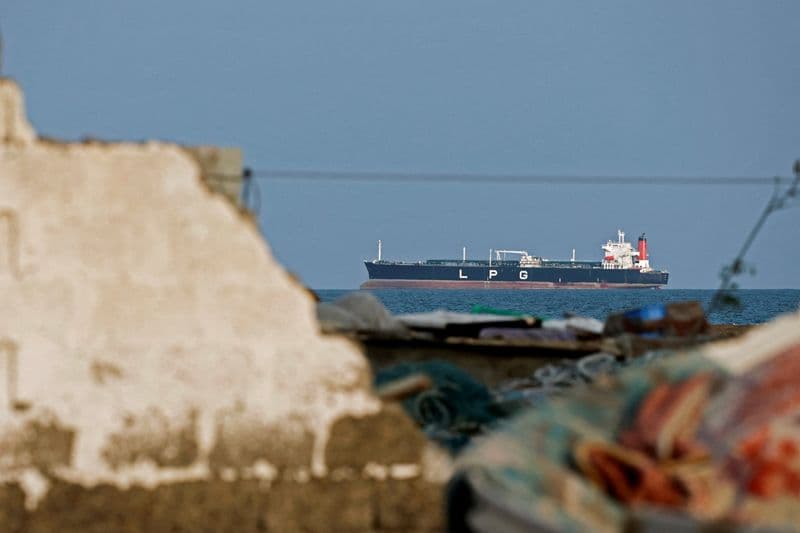
Iranian authorities have made it clear that any system for collecting transit duties from commercial vessels transiting the Strait of Hormuz must include payments in cryptocurrency.
While a fragile US-Iranian truce is taking shape in the Middle East, Tehran is setting new conditions. Iranian authorities have made it clear that any system for collecting transit duties from commercial vessels transiting the Strait of Hormuz must include payments in cryptocurrency. Tehran's logic is that digital tokens cannot be blocked by traditional banking sanctions, according to Bloomberg.
Crypto market participants argue that this scheme is virtually impossible for legitimate shipping companies to implement. However, the very fact of such a requirement has revealed the existence of a massive Iranian sanctions-evasion infrastructure, which is becoming increasingly difficult for Western regulators to control.
This week, the Financial Times, citing a representative of the Iranian Oil Exporters Union, reported that Iran will demand payment of duties in Bitcoin. Bloomberg previously reported, citing sources in the shipping industry, that Iranian operators are willing to accept payments in Chinese yuan or stablecoins.
This is part of a strategy to ensure the state can monitor and direct crypto flows without relying on external networks outside its control.
However, in practice, this plan faces enormous obstacles.
“Shipping companies around the world are already under strict supervision because they operate in high-risk areas,” explains Jake Ostrovskis, head of over-the-counter trading at Wintermute, one of the largest market makers in the crypto market. “If there is the slightest suspicion that the money is going to a sanctioned entity, no legitimate crypto broker will work with it.” The problem falls on the shoulders of large shipping companies, many of which are traded on Western exchanges and bound by strict compliance rules. They will have to legally purchase cryptocurrency for the first time and send it to a sanctioned counterparty. Historically, sanctions evasion has relied on using a long chain of intermediaries to disguise payments. An official fee levied by an IRGC-linked entity deprives the payer of any opportunity to plead ignorance.
So-called "shadow fleet" operators, long accustomed to operating in gray areas, will have an easier time: Bitcoin has long been part of their business processes. “A typical supertanker carrying around 2 million barrels of crude oil could face a duty of around $2 million. In the crypto market, this is a tiny amount, easily processed through an exchange or OTC broker,” says Rich Rosenblum, co-founder of crypto trading firm GSR and former head of crude oil trading at Goldman Sachs. “But no legitimate exchange will allow users to send funds to Iran. They’ll have to buy crypto, transfer it from the exchange to a cold wallet, and then send the transfer from there.”
In other words, the technical infrastructure for the payment exists, but using it would require legal companies to directly violate the law. The alternative—offshore, unregulated brokers willing to exchange cash for bitcoin—carries even greater criminal risks. The main problem for Iran remains the very nature of cryptocurrencies. Whether stablecoins or Bitcoin, all transactions are recorded on public ledgers. Ultimately, everyone will see these transfers. Furthermore, to turn crypto into real money, Iran will still need a counterparty willing to accept the tokens.
Stablecoins—the most convenient tool for the IRGC due to their peg to the dollar and high transaction speed—are also their most vulnerable link. Transactions are easily traceable, and stablecoin issuers (for example, Tether or Circle) have the technical ability to freeze tokens in the wallets of violators at the request of US authorities.
"Stablecoins allow us to better understand how these networks operate: we can visualize the interconnections of IRGC proxy operators," says Andrew Firman, head of national security intelligence at Chainalysis. "This gives law enforcement more opportunities to freeze these funds."
The problem for US intelligence agencies is that the IRGC obtains stablecoins not directly from issuers, but on the secondary market—through shell accounts on exchanges or illicit networks.