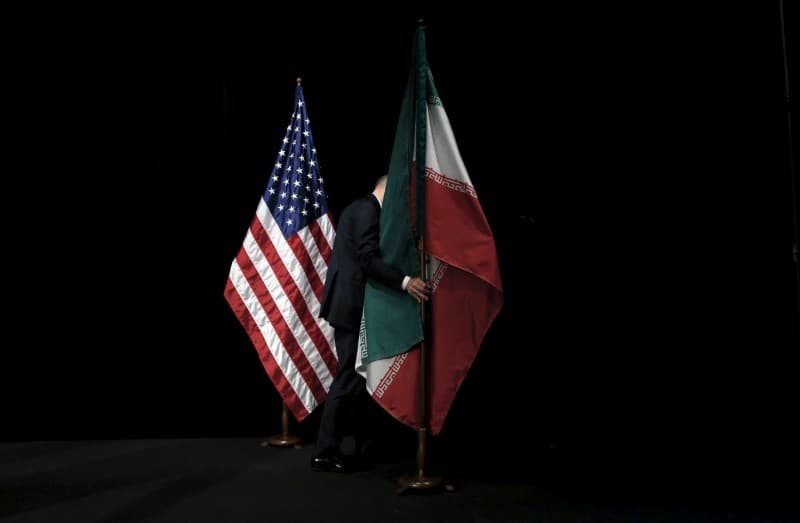
Iranian Foreign Minister Seyed Araghi warned on Monday that military action would not resolve the crisis in Hormuz,
but also stated that negotiations in Pakistan were moving forward.
"The events in Hormuz clearly show that there is no military solution to the political crisis," Araghi said in a social media post.
His comments came after tensions escalated in the Strait of Hormuz, when the US launched a military operation to escort commercial vessels through the shipping channel, prompting resistance from Iran.
Iran launched several cruise missiles, drones, and small vessels in response to the US action, reportedly hitting several ships and an oil port in the UAE.
The renewed hostilities in Hormuz threatened to disrupt the already fragile ceasefire between Washington and Tehran, as they clashed over control of Hormuz.
Iran has effectively closed the shipping channel since the war began in late February, cutting off approximately one-fifth of the world's oil supplies. Talks between the US and Iran to end the conflict have so far yielded little progress.
However, Iran's Araghi stated that talks between the two sides, brokered by Pakistan, were "moving forward," indicating continued dialogue between Tehran and Washington.
While it was unclear whether the dialogue was direct or through intermediaries, it raised some hopes for a possible de-escalation of the conflict. Oil prices fell by about 1.4% in the early hours of Tuesday after rising by about 6% in the previous session.
However, the path to de-escalation remained unclear, as the US and Iran also continued to disagree over Tehran's nuclear activities. Iran put forward a 14-point peace plan for opening Hormuz and ending the war, although Washington largely rejected it.
US President Donald Trump repeated his threats against Iran on Monday, warning that the country would be "wiped off the face of the Earth" if it attacked any American ships in Hormuz.