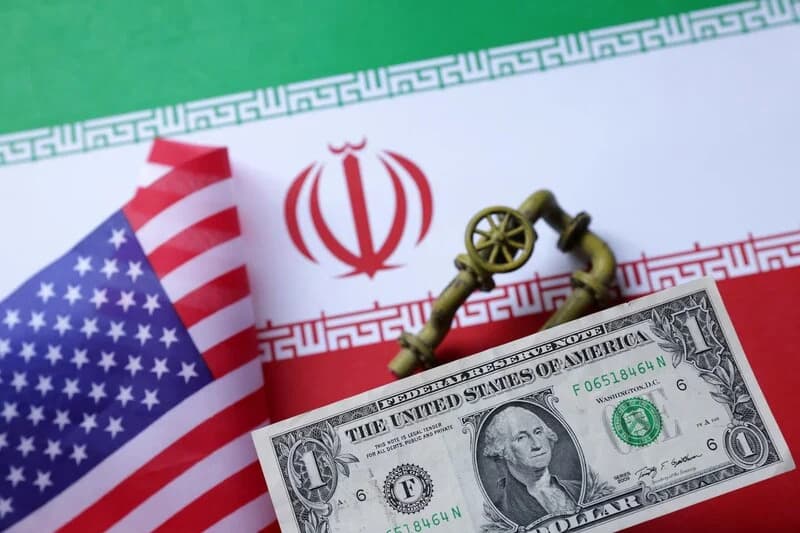
It's been 10 days since US President Donald Trump declared the ceasefire with Iran "over": both sides are launching strikes, once again heightening geopolitical uncertainty, CNBC reports.
US Central Command has been striking Iran for ten consecutive nights, stating that the strikes are intended to "degrade Iranian capabilities used to attack commercial shipping in the Strait of Hormuz."
Here's what's important to know right now.
Strait of Hormuz Traffic Drops
Ship traffic through the key waterway has dropped since the resumption of hostilities, with vessels transiting the strait with their transponders turned off, according to a team of Lloyd's analysts.
Only 30 vessels transited the strait over the weekend, according to data from the analytics firm Kpler. Before the US and Israeli strikes on Iran on February 28, more than 100 ships transited the Strait of Hormuz daily. However, the Trump administration maintains that the strait remains open and millions of barrels of oil are being exported daily under the protection of US forces.
Oil Price Surge
The resumption of hostilities sent oil prices soaring: benchmark Brent crude surpassed $90 on July 20 for the first time in over a month, while US oil futures reached a one-month high the same day.
The Strait of Hormuz is a critical energy hub: approximately 20.3 million barrels of oil and petroleum products pass through it daily, according to the US Energy Information Administration (EIA). This represents approximately 25% of global seaborne oil trade. Nearly 90% of this volume goes to Asian markets, primarily China and India. Amrita Sen, founder and director of market analysis at Energy Aspects, said on CNBC's "Access Middle East" on Monday that, with severely depleted reserves, continued outages in August could force Gulf states to cut production and push oil prices back into triple digits.
Iran's ability to retaliate
Iran still has the capacity to harm the United States, its allies, and its assets in the region. Its attacks on merchant shipping are alarming: the latest victim was reportedly a vessel belonging to the Greek company Dynacom. According to Israeli media, it caught fire after being struck by an unidentified projectile in the Strait of Hormuz.
Despite US strikes, Tehran is still capable of launching missiles and drones: its attacks on countries hosting American bases recently claimed the lives of three more US service members. Trump vowed that Tehran would "pay" for these deaths "many times over," adding that the Strait is open to everyone except Iran. "No Good Options" for Exit
On Monday, Axios, citing sources, reported that regional mediators Qatar and Pakistan presented the US and Iran with a proposal for a ten-day ceasefire, although Washington is bracing for the possible failure of the talks. According to Axios, Israel is bracing for a likely escalation of the war into a full-scale coordinated campaign in the coming days.
Last week, Clemens Chai, a senior fellow in geopolitics at the Observer Research Foundation, described the situation as a contained but widening cycle of escalation. In his view, Washington has "no good options": the US will have to either endure an Iranian war of attrition, escalate despite regional resistance, or offer concessions.
He noted that Iran maintains control of Hormuz, "like a switch that can be turned on and off," and warned that simultaneously closing the Straits of Hormuz and Bab el-Mandeb would be catastrophic for the global economy. An Escape Valve at Risk
On Monday evening, the Houthis announced an immediate naval blockade against Saudi Arabia, threatening to worsen the oil supply disruptions caused by Iranian attacks on tankers in the Strait of Hormuz.
The Houthis repeatedly threatened to close the Bab el-Mandeb Strait during the US-Iran war. The strait is a bottleneck for commercial shipping and Saudi Arabia's oil exports. After the closure of the Strait of Hormuz, Riyadh diverted millions of barrels of oil via pipeline to an export terminal on the Red Sea. These exports became a crucial escape valve for the global oil market during the conflict. Closing the Bab el-Mandeb would also block these volumes, further exacerbating the disruptions.