Previous article
Asian currencies weaken; dollar near two-month peak; yen falls
Economy
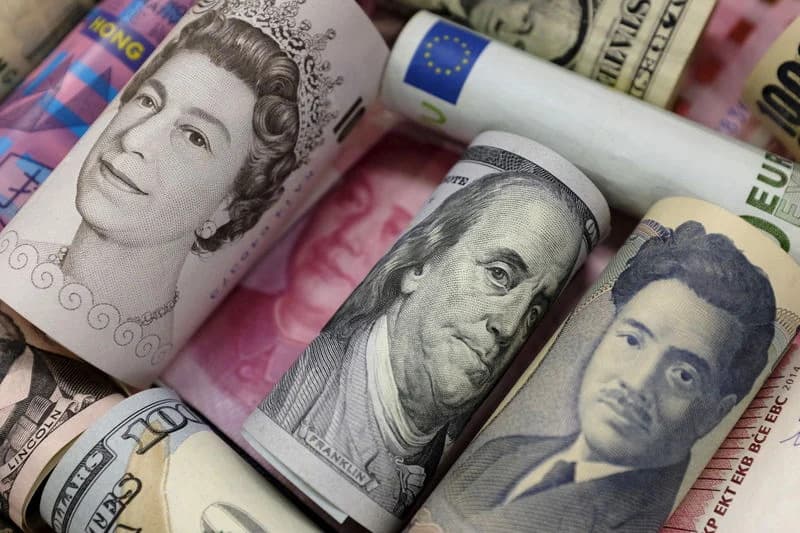
The US dollar strengthened slightly on Monday, remaining near a two-month high, while Asian currencies showed mixed performance and the Japanese yen weakened.
The US Dollar Index stood at around 101.16, up 0.2%, putting it on track to end September with a gain of approximately 1.7%—its best monthly performance since June. The USD/JPY pair rose 0.14% to 157.51, leaving the yen near recent lows; EUR/USD fell 0.12% to 1.14, and GBP/USD edged down to 1.32.
Brent crude rose more than 1% to above $106 per barrel after US President Donald Trump rejected an agreement aimed at resolving the conflict with Iran and reopening the Strait of Hormuz. This confrontation has kept energy supply risks high and intensified inflationary concerns.
Dollar supported by oil, yields, and Fed expectations
The dollar's strengthening was also supported by robust US economic data and elevated long-term Treasury yields. Markets increasingly expect the Federal Reserve (Fed) to maintain a hawkish stance, as rising energy prices threaten to keep inflation elevated. Market attention is now focused on the August PCE inflation report, due Wednesday, and September non-farm payroll data, due Friday. The PCE report is scheduled for release on September 30, while the September employment report is expected on October 2.
According to the CME FedWatch tool, markets currently price in a roughly 65% probability of another Federal Reserve rate hike in late October. This follows the Fed's September rate hike to the 3.75%–4.00% range and subsequent comments from officials suggesting that further tightening might be necessary if inflation remains persistent.
The yen fell about 0.3% to 157.7 per dollar, having strengthened on Friday following a phone call between Japanese Finance Minister Satsuki Katayama and U.S. Treasury Secretary Scott Bessent. Officials acknowledged concerns regarding the yen's undervaluation and stated that the two nations would step up cooperation on currency matters.
The yen has remained under pressure despite the Bank of Japan's September rate hike, as markets question whether policymakers are acting quickly enough to narrow the interest rate gap with other major economies.
In focus: RBA, yuan, and regional currencies
The Australian dollar hovered near the $0.70 mark, showing little change, ahead of the Reserve Bank of Australia's (RBA) monetary policy decision on Tuesday. Markets expect the RBA to raise its key interest rate by 25 basis points to 4.60%, which would mark its highest level in nearly 15 years.
This hike would be the fourth of the year. Recent comments by Governor Michele Bullock highlighted the risk that persistent energy price pressures could fuel inflation.
Elsewhere, the Chinese yuan weakened; the USD/CNH pair hovered around 6.72, while USD/CNY rose slightly to 6.71.
The offshore yuan had strengthened earlier this month but came under pressure after a three-day meeting between Trump and Chinese President Xi Jinping failed to yield significant public breakthroughs on contentious issues.
China’s manufacturing and services PMI data are due on Wednesday, ahead of the week-long National Day holiday. Japan will release August Consumer Price Index (CPI) data on Friday, alongside Eurozone inflation figures.
Across the region, the USD/KRW pair rose 0.2% to 1,356.71, USD/INR gained 0.2% to 96.112, USD/IDR climbed 0.4% to 17,944.3, USD/MYR also rose 0.4% to 4.085, and USD/THB advanced 0.6% to 33.585. The USD/SGD pair rose 0.1% to 1.28.