Previous article
The U.S. may increase customs duties on goods from China and several other countries
Economy
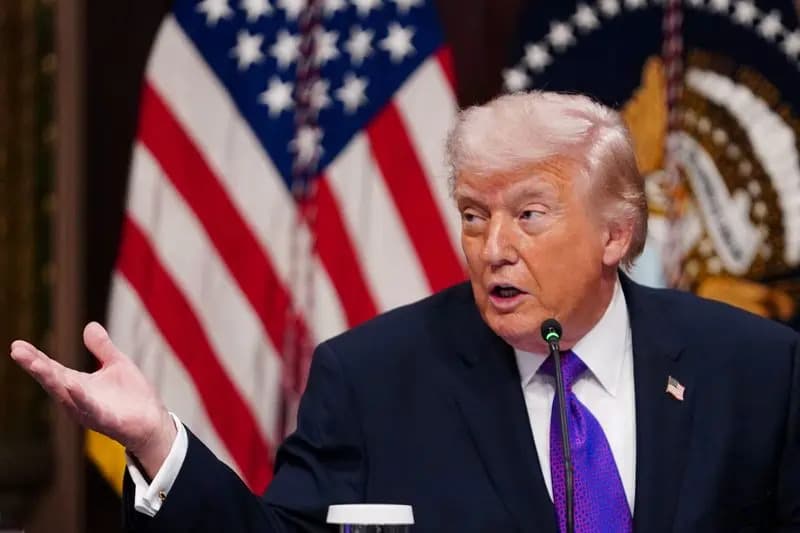
U.S. authorities are considering raising customs duties on imports from China, Japan, South Korea, and the 27 member states of the EU, according to The Wall Street Journal, citing various sources.
This measure would apply to the majority of exported goods, excluding industrial products. The final tariff rates, however, have yet to be determined.
Sources familiar with the matter state that for countries with existing trade agreements with the U.S.—namely the EU, Japan, and South Korea—tariff rates could be set at 15% or lower. For other nations, including Vietnam and India, the duties would be higher. China, meanwhile, would face even steeper rates than most other countries.
The decision to raise tariffs stems from an investigation led by U.S. Trade Representative Jamieson Greer into industrial subsidies in China, the European Union, and 14 other countries. The findings of this investigation could be released as early as this week.
Such subsidies and other forms of state support have fueled an expansion of industrial capacity in these countries, enabling their companies to export and sell low-cost goods more effectively—a trend that hinders the growth of American firms in the marketplace. Furthermore, U.S. authorities may specifically target countries that possess excess industrial capacity with higher tariff rates.
Earlier this year, U.S. President Donald Trump sought to impose high tariffs on imported goods by invoking emergency economic powers. Section 122 of the Trade Act allows the president to impose tariffs of up to 15% for a period of 150 days to address a "large and serious balance-of-payments deficit." However, the U.S. Supreme Court blocked this move in February.