• Home
  • Copytrading
  • Affiliate program
  • News
  • About

    Sign In

PrimaX Ltd. Registration Number: 2025-00015 Jurisdiction of Incorporation: Saint Lucia Registered Address: Ground Floor, The Sotheby Building, Rodney Village, Rodney Bay, Gros-Islet, Saint Lucia, Post code (Rodney Bay): LC01 401
[email protected]
+971 444-885-37
Trading

  • Open an account
  • Account types
  • Markets
  • Platforms
  • Trading conditions
Services

  • News
  • Dashboard
Miscellaneous

  • Documents
  • Privacy Policy
  • Disclaimer
  • Terms of Service

© 2026 Primаx
primaxbroker.com is owned by PrimaX Ltd.

PrimaX Ltd. adheres to international KYC and AML standards and risk disclosure requirements. Reproduction, distribution, or publication of any materials from this website without the prior written consent of PrimaX Ltd. is prohibited. 


Disclaimer and Risk Warning 


The information provided on this website is for informational purposes only and does not constitute investment advice, a recommendation, or an offer to buy or sell any financial instrument. Trading in financial markets involves substantial risk and may result in the partial or total loss of invested funds. 


PrimaX does not provide services to U.S. persons.

PrimaX is a trading name of PrimaX Ltd., a company incorporated and registered in Saint Lucia. PrimaX provides its services in accordance with the laws of Saint Lucia and does not offer brokerage, investment, or other regulated financial services in any jurisdiction where such activities require a local license, registration, or authorization from a competent regulatory authority. 


Persons located in jurisdictions where the use of PrimaX services is restricted or prohibited by applicable law are not permitted to use this website or any services provided by PrimaX

Details
  1. Home
  2. Service
  3. News
  4. How US–China riv...where it differs

Loading...

8/21/2026

Loading...

8/21/2026
More like this
The US will impose "toughest sanctions in history" on Iran
08/21/2026
Many Fed officials see a possibility of rate hikes if inflation persists.
08/19/2026
US national debt has exceeded $40 trillion for the first time.
08/19/2026

How US–China rivalry echoes the Cold War, and where it differs

12/14/2025
Economy
How US–China rivalry echoes the Cold War, and where it differs

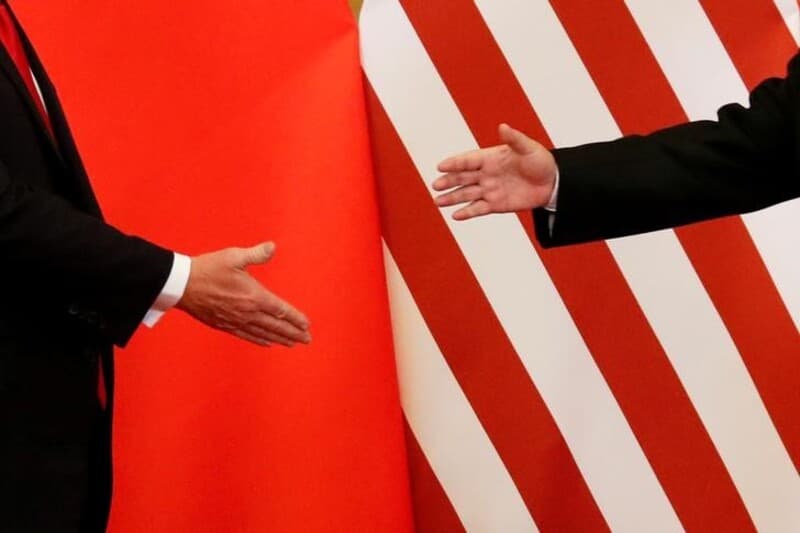
The rivalry between the United States and China is increasingly seen as a 21st-century Cold War, but these standoffs are very different from those of the 20th century.

The strategic rivalry between the United States and China is increasingly viewed as a 21st-century Cold War, but this standoff differs sharply from the superpower rivalry that defined the 20th century.

According to TD Cowen, competition is now driven by supply chains, technology, and economic interdependence, rather than sealed ideological blocs.

The similarities lie in the structure of the contest as Washington and Beijing are locked in a long-term struggle for political, economic and military influence, supported by competing networks of partners.
China has deepened ties with Russia, Iran and North Korea, creating interlocking dependencies through arms transfers, energy flows and dual use components as durable and increasingly consequential. Like the Cold War, the alignment is driven by shared opposition to US power.

The differences are more striking. Unlike the Soviet Union, China is the global processor of materials and the manufacturing hub for critical goods, from electronics to rare earths. Economic interdependence makes broad decoupling costly, complicating policy choices in a way that did not exist during the US Soviet confrontation. China’s strategy relies on exporting surplus capacity in sectors such as steel, solar and batteries, with TD Cowen noting that profitability is secondary to gaining market share.

The competition is also defined by technology. Beijing is investing heavily in artificial intelligence, quantum computing, biomanufacturing and foundational semiconductors.
TD Cowen warns that China treats overcapacity as a strategic tool and is building parallel financial and technological systems to blunt US sanctions and reduce exposure to the dollar.

Alliances differ as well. Cold War blocs were bound by ideology. Today’s alignments are pragmatic and transactional. China’s partners cooperate not because of shared doctrine but because they see the US as constraining their interests. These relationships, reinforced by capability transfers and economic support, are harder to unwind.

The rivalry has no clear containment framework. The United States struggles to match China’s long-term industrial planning and sustained investment cycles. Whereas China is focused on dominance in strategic sectors and is using economic leverage and incremental actions in Asia to shift the balance without triggering direct conflict.

The contest resembles the Cold War in scale but not in structure. Interdependence, technology and asymmetric tools define this phase, making the rivalry more complex and potentially more volatile than the one it echoes.

Categories

AllCompanyСryptocurrencyEconomy
Previous article

Why the U.S. dollar still reigns supreme - According to research firm Yardeni Research, the US dollar will continue to dominate the global currency market in early 2025.

Next article

Bitcoin tests $75,000 amid US optimism - Bitcoin rose on Friday, extending its recovery to levels last seen in late May after US President Donald Trump called on lawmakers to enact clear regulations for cryptocurrencies.