The highest court, in a 6-3 decision, said that Trump's use of the 1977 law called the Emergency Economic Powers Act (IEEPA) to impose tariffs was unlawful.
The US Supreme Court on Friday issued a long-awaited decision, ruling that President Donald Trump did not have the authority to impose large-scale reciprocal tariffs last year under the state of emergency law.
Trump criticized the Supreme Court after the decision, calling it "deeply disappointing" and "a disgrace to our nation," and suggesting that the court was "influenced by foreign interests." The president stated that the tariffs would remain in place under other laws, while also introducing a new global tariff of 10%.
As American importers pay billions of dollars in tariffs every month, the Supreme Court's decision holds significant importance. In Friday's ruling, the highest court did not rule on whether the government should refund tariffs already collected.
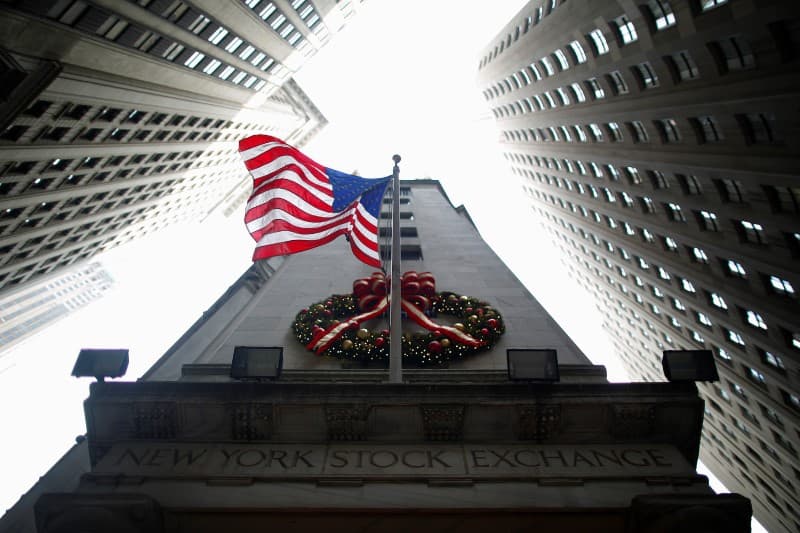
Wall Street ended the day higher after the Supreme Court's decision. Here are some popular exchange-traded funds that track the S&P 500 benchmark index: SPDR® S&P 500® ETF Trust (NYSE:SPY), Vanguard S&P 500 ETF (NYSE:VOO), and iShares Core S&P 500 ETF (NYSE:IVV).
Below are various reactions to the Supreme Court's decision:
Michael Ferroli, Chief U.S. Economist at J.P. Morgan:
"Given the statements made by various administration officials, a reasonable baseline scenario is that the administration will use various legal authorities to maintain the average effective tariff rate for U.S. buyers.
However, even this outcome will result in a significant redistribution of tariffs on various goods from different countries, creating winners and losers. It will also increase trade policy uncertainty, creating a new obstacle for capital expenditures.
Although the U.S. economy has clearly performed better than feared since the day of release, capital expenditures outside of the technology sector decreased last year, which is a very rare occurrence outside of a recession."
Zach Stambor, chief analyst at Emarketer:
"The Supreme Court's decision that President Trump does not have the emergency powers to impose many of his administration's tariffs removes one arrow from the administration's quiver, but it does not completely disarm it. While the solution provides some short-term relief, it does not address the broader trade policy uncertainty that retailers and brands face.
We expect the solution to provide a moderate tailwind for retail sales starting this year, although this benefit will gradually fade by 2028. We now forecast retail sales to grow 3.5% to $7.78 trillion this year, which is approximately $13 billion higher than our previous forecast.
While this growth looks modest, the gains are likely to be concentrated in discretionary categories with high import content, where price pressures were most acute. We expect more pronounced growth in the computer and consumer electronics, apparel and footwear, and furniture and home furnishings segments."
Glen Smith, Chief Investment Officer, GDS Wealth Management:
"The Supreme Court has overturned President Trump's tariffs, which removes a significant level of uncertainty and tension from markets that experienced the fastest correction since the COVID pandemic in March 2020 due to concerns about tariffs just 10 months ago.
It is possible that this is the catalyst the stock market needs to break out of the narrow trading range it has been in since 2026. Although it has been several months since stocks reacted meaningfully to news about tariffs, the Supreme Court's decision on this matter has been a key uncertainty for stocks since its release last April, and this uncertainty has now been resolved.
We would not make any changes to our investment portfolio based on the Supreme Court's reversal of the tariffs, but this is an important reminder of how stocks and markets adapt over time and adjust to new norms."
Mohamed El-Erian, former CEO of PIMCO:
"Who owes what to whom?
This issue of the Supreme Court's decision on the IEEPA, which affects the $133 billion in potential tariff refunds, is being actively discussed in many places and will soon be in the courts.
There are also many questions about how the tariff regime will develop, as the administration is following at least three alternative legal paths. Even if the total tariff collection remains the same by the end of the year, as Minister Bessent suggested, the impact on companies and sectors may be completely different."
Gina Bolvin, President of Bolvin Wealth Management Group:
"The market's reaction to the Supreme Court's decision on the Trump-era tariffs was muted, indicating that it was largely priced in. As the IEEPA tariffs accounted for around 60% of the imposed tariffs, the economic impact of the decision is limited. Retail companies' stocks are benefiting from expectations of reduced cost pressures.
The decision also supports inflation expectations and increases the likelihood of lower interest rates as the tariff-related obstacles are eased, which is a win for both businesses and consumers."
Jeff Buchbinder, chief equity strategist at LPL Financial:
"We wouldn't put much weight on a short-term rebound on the Supreme Court decision because the Trump administration will quickly switch to other legal grounds for replacement tariffs, while deficits will rise in the interim. However, if lower tariffs help cool inflation, it could strengthen expectations of a Fed rate cut later this year."
Jamie Cox, Managing Partner, Harris Financial Group:
“The Supreme Court’s decision will pave the way for accelerated rate cuts as inflationary expectations from tariffs are now a smaller factor. The main question is what new powers the administration will use to preserve some of the tariff revenue.”