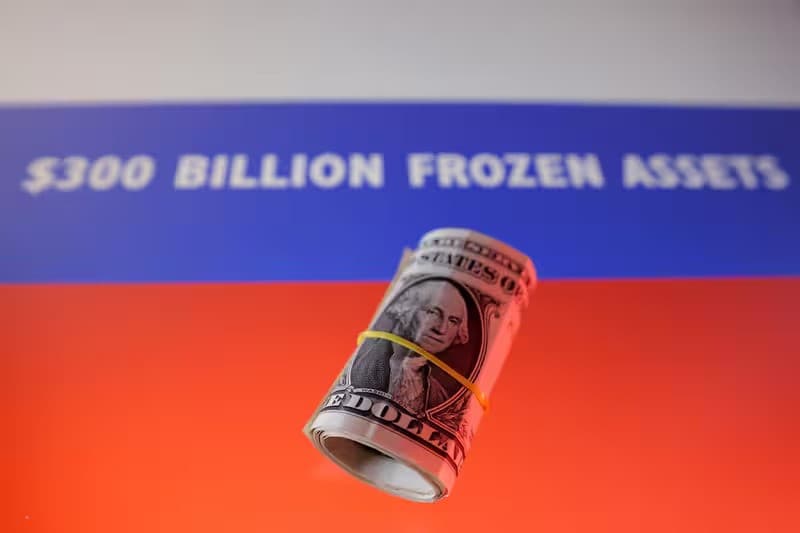
Official discussions in the EU and UK over the possible use of frozen Russian assets have accelerated.
Official discussions across the EU and the U.K. over the possible use of frozen Russian assets have accelerated, raising the prospect of a decision as early as the EU Leaders’ Summit starting on December 18, even as uncertainty remains over the outcome.
Around €210 billion of Russian central bank reserves were frozen by the G7 at the outset of Russia’s full-scale invasion of Ukraine. Roughly €185 billion was held at Euroclear in Brussels, placing the EU at the center of any potential move.
While talks about unlocking these assets have circulated for years, momentum increased after the European Commission unveiled a proposal on December 3 to use immobilized Russian assets to underpin a large loan for Ukraine.
The plan would initially amount to around €90 billion over 2026–27. U.K. ministers have also indicated they are prepared to include roughly £8 billion of frozen assets held in the U.K. as part of the broader effort.
Recent discussions among EU and U.K. officials, including meetings in London, suggest the issue is gaining political traction.
“While a final decision is still uncertain, an EU vote may happen at the EU Leaders’ Summit, which starts on Dec 18,” Morgan Stanley strategists led by Marina Zavolock said in a note.
“The proposal reportedly leans on emergency powers to bypass possible single-country vetoes within the EU, but requires the approval of Brussels, where most of the assets sit,” they added.
From a European economic standpoint, Morgan Stanley outlines three potential funding paths for Ukraine. The first involves higher spending through national budgets, but the bank highlights that fiscal constraints are binding across much of the EU, with countries such as France and Italy having limited room to raise defense or external support spending.
A second option would be greater use of the EU budget, though this faces institutional challenges because EU budgets are set on a multi-annual basis, require unanimity, and would likely necessitate higher EU resources.
Against that backdrop, the strategists argue that a third option—using frozen Russian assets as collateral for a loan—could be the most straightforward route, as it would not require immediate national funding and could potentially bypass unanimity requirements.
“Accordingly, we think this road will eventually be chosen by EU Members to provide the needed funding for Ukraine,” the strategists wrote.
Investor expectations around such a move remain subdued, according to the bank, reflecting years of debate with mixed political backing. As a result, the topic rarely features in investor discussions.
However, Morgan Stanley believes a meaningful unlock could drive further mean reversion in European defense-related and Ukraine-linked assets, particularly given the scale of Ukraine’s financing needs.
The IMF estimates Ukraine will require at least $65 billion in external financing through the end of 2027, excluding military spending, while broader estimates including defense point to substantially higher annual requirements.
Within its European defense coverage, Morgan Stanley sees Rheinmetall “as most exposed, with Ukraine accounting for ~10% of current sales and <3% of backlog.”
In sovereign credit markets, the Wall Street giant says a more material use of Russian assets would be supportive for Ukraine bonds by helping close funding gaps and reducing the likelihood of another external debt restructuring.
The bank also downplays risks to the euro, arguing that while legal and reputational questions matter, the exceptional nature of the situation and the lack of credible alternatives mean the euro’s reserve currency status is unlikely to be materially undermined.
For European rates, the bank expects only modest near-term market impact, noting that most frozen assets have already matured and now sit largely in cash rather than bonds, limiting direct implications for government debt markets.