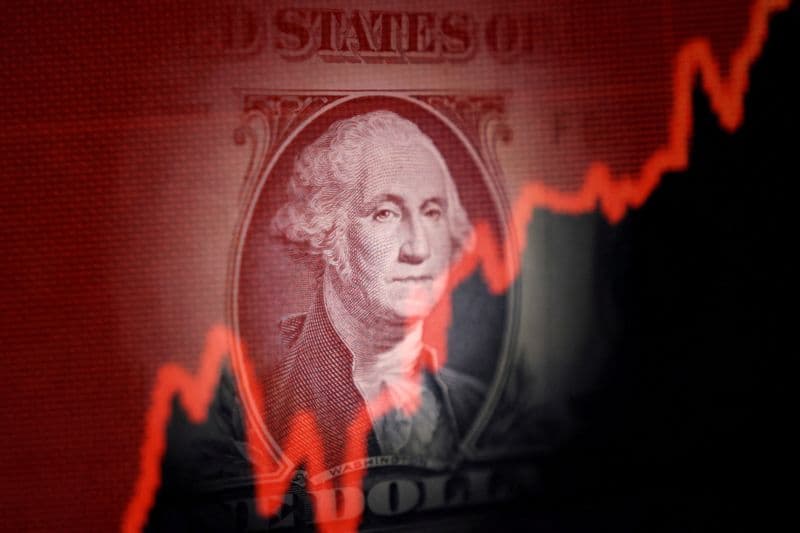
Currency prices are determined by demand and the actions of national central banks. However, central banks generally do not aim to achieve a predetermined exchange rate.
For example, the Russian Central Bank shapes the country's monetary policy and sets foreign exchange rates against the ruble, including the dollar. Russia operates a floating exchange rate regime. "A stronger ruble exchange rate is one manifestation of monetary policy aimed at slowing inflation. This demonstrates that the high rate is working as intended," the Central Bank explains.
But why do other countries peg their currencies to the US dollar? To reduce risks and price fluctuations. A single currency makes mutual settlements more convenient and profitable. However, the problem arises that the economies of these countries depend on the US economy. Nevertheless, the US dollar remains the primary currency by which prices are determined for other currencies. Exchange rates in this material are current as of January 8, 2026.
• Dollar
• Ruble
The 10 Most Expensive Currencies in the World
1. Kuwaiti Dinar
1 Kuwaiti dinar = $3.25
Why is the Kuwaiti dinar the most expensive currency in the world? Kuwait is a leading oil exporter, accounting for approximately 8% of the global market. Oil accounts for 95% of the country's total exports. This oil export accounts for stable income and the absence of economic crises. These factors help maintain the dinar's high exchange rate against the dollar.
2. Bahraini Dinar
1 Bahraini dinar = $2.65
Bahrain is also a major oil exporter—60% of the country's income comes from the sale of raw materials. However, it also sells chemicals, transport goods, electronics, and textiles. Combined with a loose monetary policy, these exports make the Bahraini dinar so expensive. 3. Omani Rial
1 Omani Rial = $2.6
Oman, like Kuwait and Bahrain, is a leading oil exporter. Oil accounts for approximately 62% of exports. However, the currency is further strengthened by interest in investing in the country's businesses. Oman does not levy taxes on residents, which is attractive to foreign entrepreneurs.
4. Jordanian Dinar
1 Jordanian Dinar = $1.4
The Jordanian currency has two key factors behind its high price. First, the sale of fertilizers, textiles, and pharmaceuticals. In February 2025 alone, exports amounted to $991 billion. Second, its geopolitical significance. Jordan is located between Israel, Iraq, Saudi Arabia, and Syria. The country is of interest to both eastern and western countries, who are actively investing in it, taking into account their own interests. 5. British Pound Sterling
1 pound sterling = $1.34
The United Kingdom has the most valuable currency in Europe (not the EU). Pounds sterling are bolstered by the country's attractiveness for investment. Business is actively developing. For example, in 2024, there were 69 unicorn companies (companies with a pre-IPO market capitalization of over $1 billion – Frank). The UK also has a strong position on the global political stage.
6. Swiss Franc
1 Swiss Franc = $1.25
The Swiss currency is consistently considered reliable due to the country's wealth. The country also has a neutral political status, reducing the risk of crises and being largely independent of external factors. Therefore, investment in the country is attractive to businesses and other countries.
7. Cayman Islands Dollar
1 Cayman Island dollar = $1.20
The Cayman Islands are a British Overseas Territory in the Caribbean Sea. The country is attractive for its offshore zones, where approximately $1.1 trillion is held. These consist of numerous tax-exempt funds. Foreign businesses find it profitable to keep their money in the islands' economy.
8. Euro
1 euro = $1.17
The euro was widely introduced in 2002. It is common to all EU countries, which backs up the currency with their economies. The euro covers all industries and investments available within them, making it an attractive investment for other countries. Therefore, some countries peg their currencies to the euro.
9. Singapore Dollar
1 Singapore dollar = $0.78
Singapore is one of the most expensive countries to live in. Thanks to its developed infrastructure and convenient location between Asia and Oceania, it actively cooperates with other countries. At the same time, the country is attractive to investors due to its flexible tax system and high standard of living. 10. Canadian Dollar
1 Canadian dollar = $0.72
Canada's currency is heavily tied to trade relations with the United States. Therefore, the slightest fluctuations affect its price. After Trump imposed 25% tariffs on Canada, the dollar sank to $0.69. However, the currency remains attractive due to the country's political stability and growing economy.
Top 10 Most Expensive Currencies in the World Against the Ruble
Data taken from the Central Bank of the Russian Federation exchange rate:
• British Pound Sterling - 105.6 rubles.
• Swiss Franc - 99.19 rubles.
• Euro - 92.09 rubles.
• US Dollar - 78.22 rubles.
• Singapore Dollar - 60.84 rubles.
• Canadian Dollar - 57.15 rubles.
• Australian Dollar - 52.4