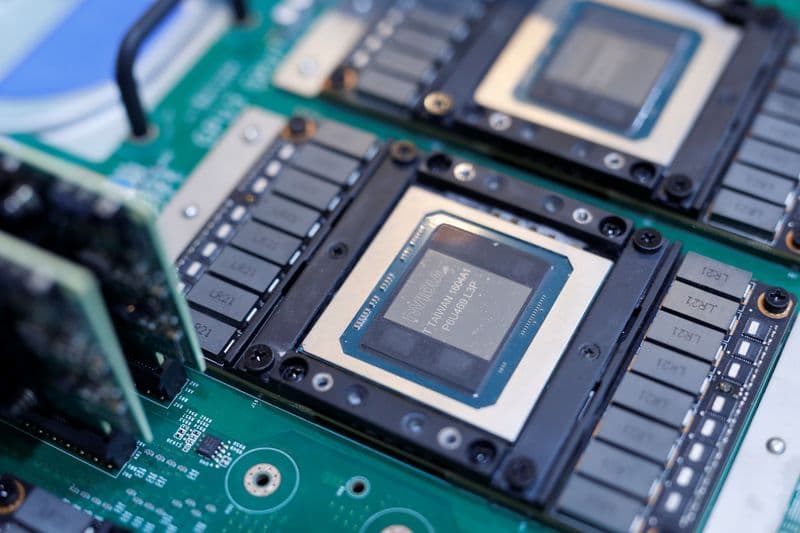
Earlier this month, US President Donald Trump imposed a new 25% tariff on certain artificial intelligence chips, including Nvidia's H200 AI processor and a competing model from Advanced Micro Devices.
This announcement, following a nine-month investigation into the semiconductor industry, is seen as part of a broader effort to encourage American chipmakers to build more products domestically rather than rely on foreign companies, particularly those from Taiwan.
White House officials later clarified that the tariffs would be narrowly targeted, adding that they would not apply to chips and other devices imported for use in US data centers—many of which contain high-performance processors that power AI models. Commerce Secretary Howard Lutnick will also have broad authority over other exemptions, according to a Trump administration statement.
This move comes after Trump promised to impose tariffs on Chinese semiconductor imports, though he delayed this order until June 2027. The president also announced last year that he would allow Nvidia to export its H200 chips to China in exchange for a share of sales—though questions arose about whether this would violate the constitutional ban on export tariffs.
Nevertheless, the White House's position indicates that the AI race between the US and China is increasingly becoming a national security issue, according to analysts at Wolfe Research.
In their note, analysts, including Stephanie Roth, argued that this was underscored by the COVID-19 pandemic, when constraints on the flow of chips revealed the global dependence on a stable supply of these processors.