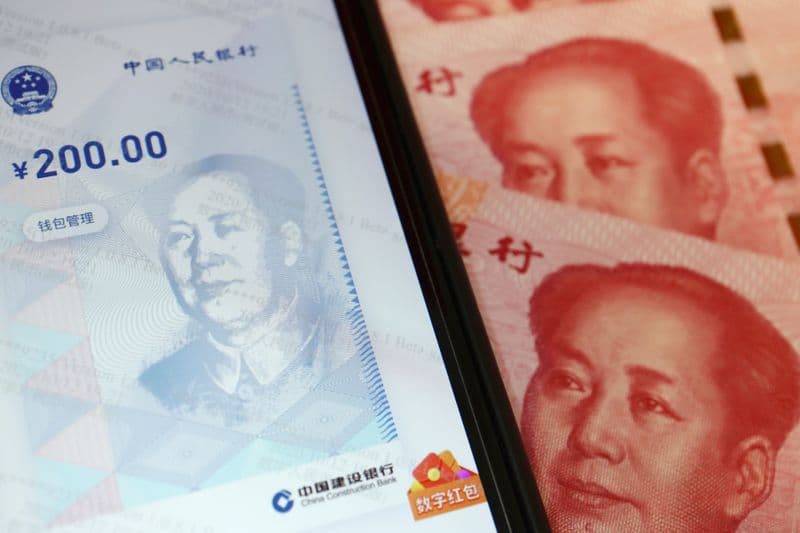
Innovation in banking has largely focused on user interfaces rather than the underlying mechanisms of money circulation.
Payments are still processed in batches, often with delays, and deposits remain dormant for long periods.
Digital money changes this by allowing money to move instantly, 24/7, within shared systems rather than through layers of intermediaries.
The biggest change could come from speed. If payments and transfers are settled instantly, money doesn't have to wait for clearing. This increases the speed with which deposits move through the system, which in turn changes the way banks are funded and their balances are used.
Banks may make less profit from holding deposits but process much larger transaction volumes.
Digital money could also blur the line between savings and investments. Instead of storing cash in a traditional savings account, customers can hold funds in digital form, which can earn income and be transferred or invested at any time.
Some large asset managers have already begun offering digital versions of money market funds with instant settlements, demonstrating how this model could work in practice.
For clients, the benefits are clear. Payments could become faster and cheaper, especially for cross-border transactions. Access to investments could expand as assets such as bonds or real estate are broken down into smaller digital units, lowering the barrier to entry.
For banks, the tradeoff is higher technology costs and less reliance on physical branches and staff.
The transition is unlikely to be smooth or uniform. Adoption is expected to be uneven across countries and customer groups, with businesses and younger users moving first. Regulators also remain cautious, which could slow progress.
However, the direction is clear. Since the best products usually win out over time, banks that adapt to digital money early may gain an advantage, while those relying on older systems risk being left behind.
The future of banking may not be determined by new apps, but by a quiet transformation of how money itself moves.