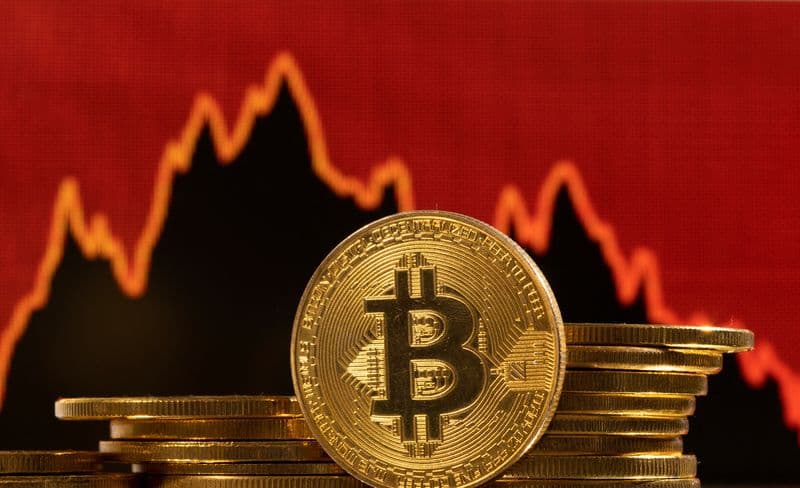
Bitcoin stabilized near $72,000 on Thursday, trading above that level for the first time in about a month after a broad rally lifted cryptocurrency markets and related stocks the previous day.
The world's largest cryptocurrency rose more than 6% on Wednesday, rebounding after trading below $70,000 for much of the past few weeks. This move has brought Bitcoin closer to regaining its status as a geopolitical hedge amid ongoing tensions in the Middle East.
Part of the rally was driven by renewed institutional demand. Bitcoin spot exchange-traded funds attracted approximately $1.1 billion in net inflows over the three trading sessions from March 2 to 4, according to data compiled by ETF trackers, including Farside Investors and CoinGlass.
The inflow marks a reversal after weeks of outflows earlier this year, which weighed on sentiment towards the asset. On March 4 alone, spot Bitcoin ETFs recorded approximately $461.9 million in net inflows, with BlackRock's IBIT (NASDAQ:IBIT) accounting for $306.6 million of that total, according to CoinGlass data.
Despite a recent recovery, Bitcoin declined for five consecutive months from October to February, marking its longest losing streak in years.
Following this decline, Investing.com spoke with American entrepreneur and cryptocurrency investor Michael Terpin to discuss the forces currently driving the market and where the world's largest cryptocurrency might be headed in the coming months.
Terpin, an early thought leader in Bitcoin and cryptocurrency, was dubbed the "godfather of crypto" by CNBC for his advisory and marketing work on many early projects in the industry.
1) To what extent are macroeconomic forces behind Bitcoin's recent weakness?
"The main factor in the four-year cycle is the lingering effects of the halving. In each cycle to date, Bitcoin has acted quite predictably – reaching a new all-time high within seven months of the halving, then bursting that bubble within 11 months, beginning a slow, painful price decline that capitulates about a year later."
"Macroeconomic forces to date have simply accelerated or blunted the peak, but they have had little impact on the bottom, which typically follows a significant bankruptcy or failure rooted in the excessive use of leverage by large institutions, whether MtGOX in 2014 or FTX in 2022."
2) ETF flows were the main tailwind earlier in the cycle. What do you see now in terms of institutional demand, and what are the prospects for institutional participation going forward?
"ETFs partly mimicked first-generation retail buyers in that they tended to sell at the top, but there are also professional traders using ETFs for additional leverage, and institutions like Harvard buying their Bitcoin in ETF form, so there shouldn't be a panic sell-off at the bottom, as has always happened with new retail investors."
3) Bitcoin fell about 15% in February, its longest losing streak in years. Should investors brace for further weakness in the coming months?
"Indeed, February marked five consecutive months of losses, many of them double-digit. The four-year cycle history has shown a similar pattern after a bubble bursts, but every other cycle has had a rising month in March, so it's reasonable to expect March (which started with an upward movement) to be positive."
"However, the bottom is likely not yet in sight, and I expect April to be another negative month, with the final low for this correction being at least 60% below the bubble top, taking us down to around $50,000 before capitulation."
4) Where do you think Bitcoin will trade by the end of the year?
"The path of least resistance is lower lows before capitulation around $50,000 (bad macroeconomic news, especially related to cryptocurrencies, such as a major fund or exchange failure, could push it down to $40,000 by early fall)."
"The path back up is slow, so I don't see Bitcoin getting much above $80-100,000 by the end of the year, but it should be on track for big gains in 2027, 2028, and 2029 before the next bubble bursts." In this case, it's all about supply shock. If demand remains moderate, it will be difficult for us to get above $200,000, but if strong interest and FOMO return during the next bull market, it could soar above $300,000, even $400,000. I still believe it will reach $1 million by 2037, just not in a straight line."