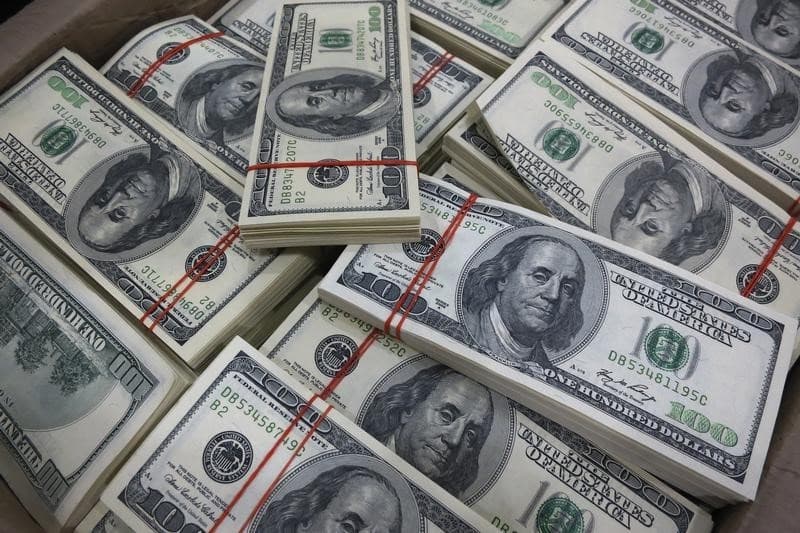
The American currency is poised to post its best month since July last year.
The military conflict in the Middle East has completely upended Wall Street's plans, forcing major investment banks to urgently rewrite their forecasts for the world's main reserve currency, Bloomberg reports.
The Bloomberg Dollar Spot Index, which tracks the dollar against a basket of major currencies, soared more than 2% in March. Two factors drove this unprecedented growth: a massive flight of investors into safe-haven assets and a sharp decline in expectations for a US Federal Reserve interest rate cut.
This marked a dramatic reversal for the American currency. On the eve of the outbreak of hostilities, the dollar had fallen for the fourth consecutive month. The protracted conflict caught investment banks and traders, who had been betting on a further weakening of the dollar until the very end, off guard. A telling example is JPMorgan Chase & Co. strategists, who changed their dollar forecast to bullish for the first time in a year. Speculators on the futures market also turned en masse to buying the dollar, although as recently as mid-February, their bearish positions were at their highest level in almost five years.
As recently as January, financial giants like Goldman Sachs Group Inc. and Deutsche Bank AG were entering 2026 with confident forecasts of a dollar decline, based on expectations of a easing Fed monetary policy.
In 2025, the Bloomberg Dollar Index collapsed by approximately 8%. Demand for the currency was undermined not only by three Fed rate cuts but also by Donald Trump's aggressive tariff war, which sparked rumors of a possible capital flight from dollar assets. The paradox is that investors then continued to buy US assets, simply hedging their currency risks. Many investment houses are currently opting not to update their macroeconomic forecasts at all due to the fog of uncertainty: how long will the war last, will there be an escalation, or will the parties reach a peace agreement?