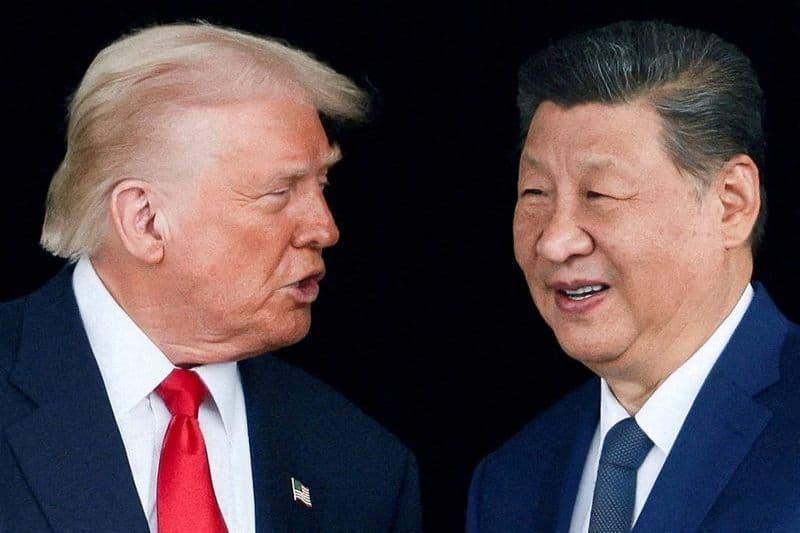
US President Donald Trump plans to meet with Chinese President Xi Jinping in Beijing next week.
This will be the American leader's first visit to the Chinese capital in nearly a decade.
According to Reuters, the summit will take place from May 14 to 15 and aims to stabilize relations, which have been strained by trade disputes, the situation around Taiwan, and the ongoing war in Iran.
Analysts do not expect significant breakthroughs, but do not rule out the possibility of extending the trade truce agreed to last October.
Economic concessions remain a top priority for the Trump administration ahead of the November midterm elections. The two countries are developing a trade council mechanism designed to increase trade without compromising national security.
The US is seeking significant purchases of poultry, beef, and energy from China, as well as a multi-year commitment to purchase 25 million metric tons of soybeans annually. Boeing is at the center of the negotiations, engaged in protracted talks with Beijing over a deal potentially involving 500 737 MAX aircraft. The signing of the agreement was previously delayed due to US threats to restrict supplies of critical engine parts.
Technology is also playing a key role. Beijing is seeking an easing of US restrictions on the supply of advanced semiconductors, while Washington is demanding that China lift export controls on rare earth metals and critical minerals.
Tensions have increased amid recent US sanctions against Chinese refineries for purchasing Iranian oil, and Beijing has introduced regulatory measures to scrutinize foreign companies shifting supply chains out of China.
The war in Iran poses a complex diplomatic obstacle. US Treasury Secretary Scott Bessent has called on China to join efforts to open the Strait of Hormuz, but Beijing insists that resolving the conflict is Washington's responsibility. Regarding Taiwan, Chinese Foreign Minister Wang Yi called the island "the main source of risk" to bilateral relations. Beijing is reportedly privately seeking a change in US diplomatic language regarding Taiwan independence—a move that could significantly impact regional security assessments.