On Friday, May 22, Kevin Warsh was sworn in and officially assumed the position of the 17th Federal Reserve Chairman, succeeding Jerome Powell.
The ceremony took place at the White House in the presence of President Donald Trump—the first time in nearly 40 years. The last time a new central bank chairman was sworn in in the Oval Office was in 1987, when Alan Greenspan took over. Subsequent swearing-in ceremonies have taken place within the Fed itself. For example, both Powell swearing-ins—in 2018 and 2022—took place there without the president's presence.
"Work without looking over my shoulder."
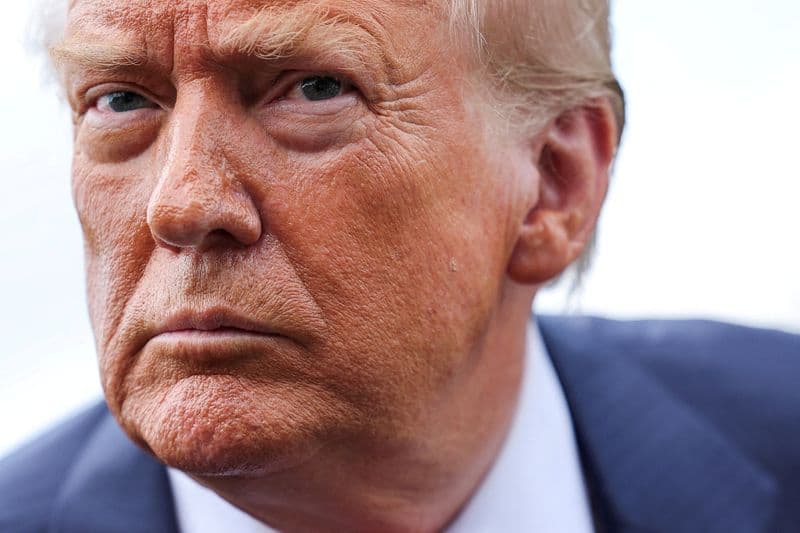
Introducing Warsh to the assembled officials, politicians, and journalists, Trump joked that when he turned on the television that morning, he discovered that the markets had risen 600 points. "That means they like you," the president said. Trump called the Federal Reserve "the pillar of the global financial system and the most important central bank in the world," and specifically addressed the issue of independence, a central theme in the discussion surrounding the new head.
"And frankly—I say this completely sincerely, without any double entendre. I want Kevin to be completely independent. I want him to work independently and just do his job well. Don't look over my shoulder. Don't look over anyone else. Just do your job and do it well," Trump said.
What Warsh said
In his response, Warsh stated that he had "no illusions" about the challenges he faces, but believed that "these years can bring unprecedented prosperity that will raise the standard of living for Americans of all walks of life."
"Our mandate is to promote price stability and maximum employment. When we pursue these goals with wisdom and determination, inflation can be lower, growth stronger, real incomes higher, and America's place in the world more secure," he said. Warsh promised to lead the Fed with a reform-oriented approach, learning from past successes and mistakes, and adhering to "clear standards of integrity and performance."
A reference to Greenspan
A significant portion of Warsh's speech was devoted to Alan Greenspan, who chaired the Fed for nearly 19 years, from 1987 to 2006. Greenspan is famous for resisting monetary tightening in the early 1990s, despite an economic boom and falling unemployment. He believed that increased productivity, driven by advances in information technology, would curb inflation, and therefore allow interest rates to remain low. Many now believe that during his presidency, the United States experienced the longest economic expansion in history, according to the Federal Reserve History website. As reported by the Frankfurter Allgemeine Zeitung, Warsh shares Greenspan's views on monetary policy and believes his methods are still applicable today—except that today, productivity growth will be driven not by IT, but by artificial intelligence.
In his speech, Warsh also mentioned the president who appointed Greenspan to the Fed chair in 1987, Ronald Reagan. Warsh thus indirectly compared Trump to him, who is largely inspired by the views and policies of his predecessor, the author of the slogan "Make America Great Again." As Reuters noted, a huge portrait of Reagan, watching over Trump, has hung in the Oval Office since February 2025. Significantly, Greenspan was extremely loyal to Reagan and supported his policies. In 2003, during a speech at the Ronald Reagan Library in Simi Valley, he remarked that "Ronald Reagan undoubtedly ranks first among American presidents in the magnitude of his positive legacy."
The Question of Independence
During the debate on Warsh's candidacy, his critics pointed to two main issues: his independence from the White House and the lack of transparency in his personal finances. Democrats feared he would cave to Trump's pressure and aggressively cut rates. Warsh's investments, amounting to over $100 million and never fully disclosed, sparked a separate controversy. Senator Elizabeth Warren demanded an explanation at a Banking Committee hearing: specifically, she asked whether his Juggernaut fund was invested in companies affiliated with Trump or his family, entities involved in money laundering, Chinese assets, or financial institutions linked to Jeffrey Epstein. Warsh did not disclose the structure of his assets but promised to sell them all if confirmed.