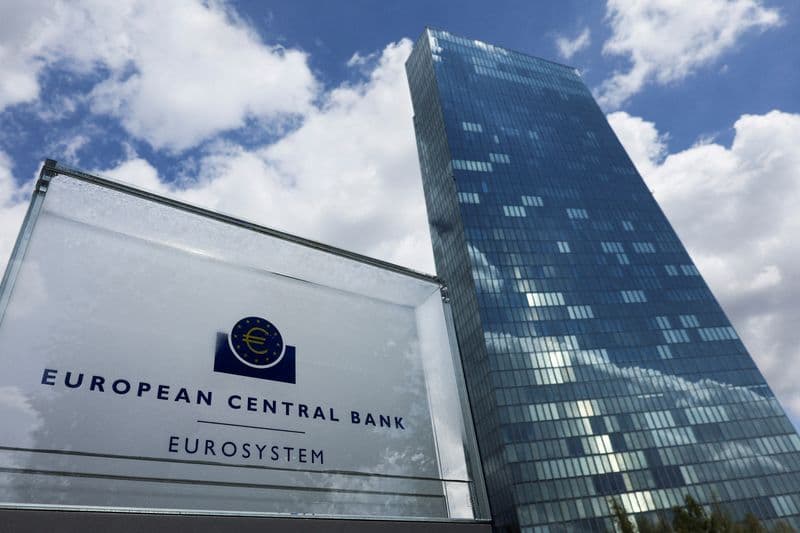
The European Central Bank is increasingly leaning toward raising its interest rate next month as the conflict with Iran increases inflationary pressures.
Kocher said inflation will likely be higher this year than previously estimated as rising energy costs related to the conflict add to the price pressure facing households and businesses across the region.
Speaking on the sidelines of a meeting of European finance ministers in Cyprus, Kocher said policymakers are effectively weighing the choice between keeping rates unchanged and raising them at the ECB's June meeting.
"There are always very low-probability scenarios that lead to a different assessment of the situation, but at the moment, everything points to us choosing between keeping rates unchanged and raising them," Kocher said, according to Bloomberg. The ECB's next policy meeting is scheduled for June 10-11, when officials will also receive updated economic forecasts covering growth and inflation.
These comments come as financial markets reassess expectations for European monetary policy following a sharp rise in oil prices following the outbreak of hostilities between Iran and the United States earlier this year.
The conflict disrupted shipping through the Strait of Hormuz, a key route for global energy exports, raising concerns that higher fuel and transport costs could lead to broader inflation.
While US President Donald Trump said on Saturday that a peace agreement with Iran has been largely agreed upon, details of any deal have not yet been announced.
Kocher noted that uncertainty remains high and declined to provide guidance on future ECB policy after next month's meeting.
He added that recent economic data shows the eurozone economy remained relatively resilient despite geopolitical tensions and weaker-than-expected growth in the first quarter. Inflation recently returned to the ECB's 2% target before the conflict began pushing energy prices higher. Policymakers are now assessing whether the latest price shock could lead to more persistent inflation pressure and impact long-term inflation expectations.
The ECB's new forecasts, to be published next month, are expected to play a key role in shaping the central bank's policy decision.