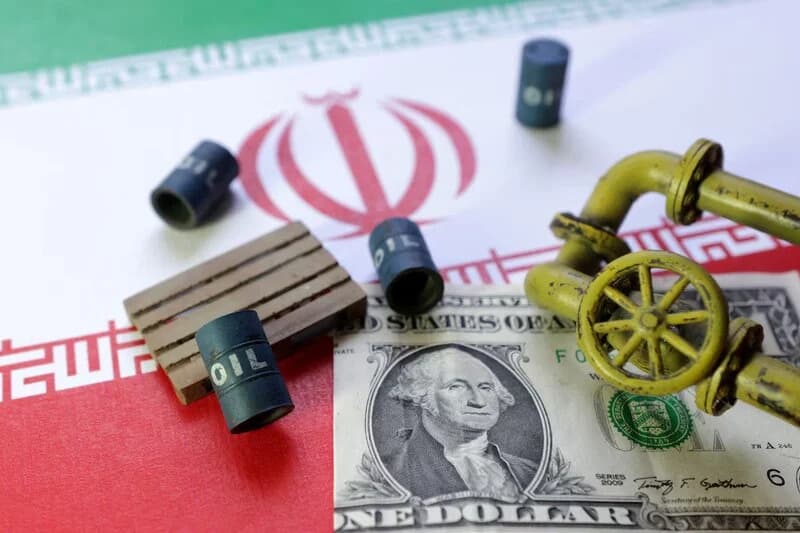
Oil prices fell on Thursday as markets assessed the impact of new US strikes on Iran, which could delay negotiations to end the war and fully resume shipping through the key Strait of Hormuz.
Brent futures fell 1.32% to $76.99 per barrel by 7:49 GMT, while WTI fell 1.2% to $72.64. After an initial decline, prices recovered some of their losses. Both benchmarks reached their highest levels since June 22 the day before.
On Wednesday, both benchmarks gained more than a dollar after the US launched new strikes on Iran, triggering Tehran's retaliatory attacks on Kuwait and Bahrain. The US said the strikes were in response to Tuesday's attack on three cargo ships in the Strait of Hormuz. They followed a few hours after Trump's announcement that the interim ceasefire with Iran was "over."
"Traders are reassessing the situation, especially given the uncertainty surrounding oil shipments through the Strait of Hormuz," said Tim Waterer of KCM Trade. "The likelihood that the next step will be de-escalation is what's keeping oil from significantly rising."
According to insurance industry sources, some military insurers have advised shipping companies to suspend passage through the Strait.
Goldman Sachs notes that the risks to Gulf supply remain two-sided and expects flows to normalize by the end of July, with continued negotiations and security guarantees for shippers. However, a breakdown in negotiations and an increase in attacks on tankers could further disrupt supply.
"In the base case, Brent is likely to trade in the $75-$85 range over the next month, with a slight upward bias," said Anika Gupta of WisdomTree. "Supply recovery is real, but incomplete, and diplomacy, although stalled, has not completely collapsed."
Meanwhile, Russia on Wednesday banned diesel fuel exports to support the domestic market after Ukrainian drone attacks on refineries caused a fuel shortage and a price spike.