• Home
  • Copytrading
  • Affiliate program
  • News
  • About

    Sign In

PrimaX Ltd. Registration Number: 2025-00015 Jurisdiction of Incorporation: Saint Lucia Registered Address: Ground Floor, The Sotheby Building, Rodney Village, Rodney Bay, Gros-Islet, Saint Lucia, Post code (Rodney Bay): LC01 401
[email protected]
+971 444-885-37
Trading

  • Open an account
  • Account types
  • Markets
  • Platforms
  • Trading conditions
Services

  • News
  • Dashboard
Miscellaneous

  • Documents
  • Privacy Policy
  • Disclaimer
  • Terms of Service

© 2026 Primаx
primaxbroker.com is owned by PrimaX Ltd.

PrimaX Ltd. adheres to international KYC and AML standards and risk disclosure requirements. Reproduction, distribution, or publication of any materials from this website without the prior written consent of PrimaX Ltd. is prohibited. 


Disclaimer and Risk Warning 


The information provided on this website is for informational purposes only and does not constitute investment advice, a recommendation, or an offer to buy or sell any financial instrument. Trading in financial markets involves substantial risk and may result in the partial or total loss of invested funds. 


PrimaX does not provide services to U.S. persons.

PrimaX is a trading name of PrimaX Ltd., a company incorporated and registered in Saint Lucia. PrimaX provides its services in accordance with the laws of Saint Lucia and does not offer brokerage, investment, or other regulated financial services in any jurisdiction where such activities require a local license, registration, or authorization from a competent regulatory authority. 


Persons located in jurisdictions where the use of PrimaX services is restricted or prohibited by applicable law are not permitted to use this website or any services provided by PrimaX

Details
  1. Home
  2. Service
  3. News
  4. What are the ris...trait of Hormuz?

Loading...

7/20/2026
Previous article

What are the risks of Japan's pension fund rebalancing? - The analysis follows statements by Finance Minister Satsuki Katayama, who called on pension funds to increase their allocation to Japanese financial assets.

Next article

British pound sterling: BofA's outlook on the currency - The pound's upward breakout bolsters arguments for further long-term gains, but the swiftness of the recent rally limits the potential for short-term gains.

What are the risks of closing the Strait of Hormuz?

07/19/2026
Economy
What are the risks of closing the Strait of Hormuz?

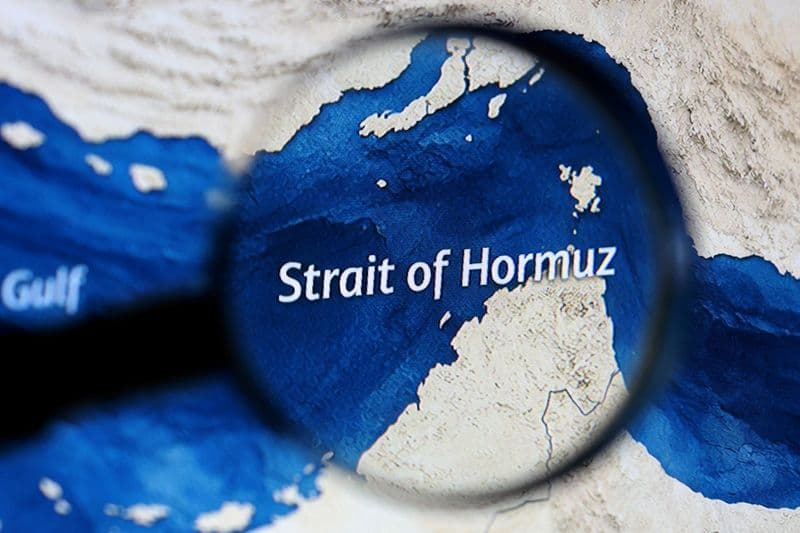
A prolonged closure of the Strait of Hormuz could push the price of Brent crude oil to $150 per barrel, renew inflation, and force major central banks to raise interest rates.

Energy markets have coped with the disruptions caused by the Iran conflict by rerouting pipeline flows and drawing down inventories. About a third of the oil previously transported through the Strait has been rerouted through alternative regional infrastructure.

However, these buffers are depleting. Commercial oil inventories in OECD countries are at their lowest levels in recent memory, leaving the market with limited capacity to withstand a new supply shock.

The baseline scenario assumes the disruptions will be temporary: Brent will reach $80 and $75 per barrel in the third and fourth quarters, respectively. Options markets indicate that traders still view this outcome as the most likely, although the likelihood of a sharp price spike has increased.

If the strait remains closed, oil could initially rise to $120. In a more unfavorable scenario, Brent could reach $150 from the current $84, and European natural gas prices would rise to €90 per megawatt-hour from €54.

Such a rise would push US inflation to nearly 5% and slow annual economic growth to below 1% in the second half of 2026. Annual US economic growth would decline to 1.7%, compared to 2.2% in the baseline forecast.

Europe would face a more significant stagflationary shock. Eurozone growth would plateau in 2026, and inflation could peak above 6%. The UK would be on the brink of recession, with inflation there potentially reaching 7%. Asian economies will also feel pressure. China's export support from electric vehicles and other green energy products may weaken as high energy costs deter consumers from large purchases. India's growth rate in 2026 could slow to 5.5%, down from 6.5% in the baseline scenario.

Central banks will likely respond by tightening policy to prevent energy cost increases from being passed through to wages and broader prices. The unfavorable forecast suggests year-end rates of 4.63% in the US, 3.25% in the eurozone, and 4.75% in the UK.

China helped balance the oil market by cutting crude imports by more than 40% year-on-year in June and drawing down domestic inventories—but this strategy cannot continue indefinitely.

Categories

AllCompanyСryptocurrencyEconomy
More like this
British pound sterling: BofA's outlook on the currency
07/19/2026
What are the risks of Japan's pension fund rebalancing?
07/18/2026
UBS: space economy to reach $1.3 trillion by 2040
07/18/2026