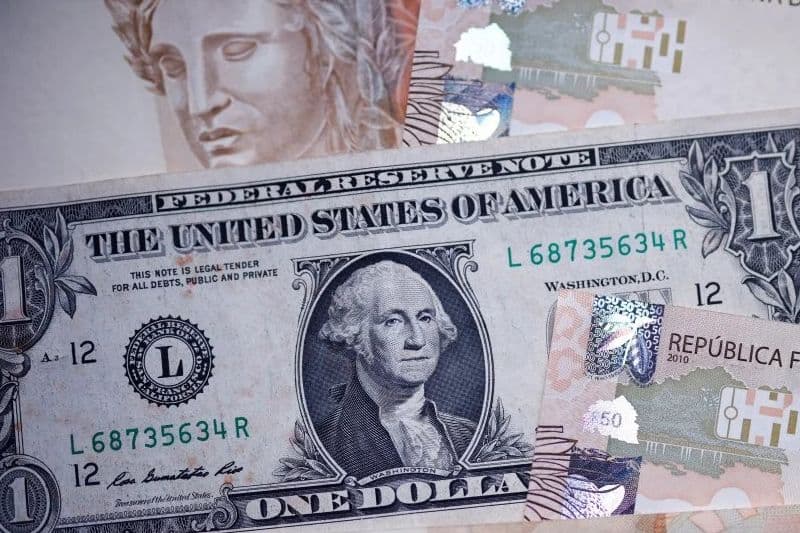
Asian currencies traded in narrow ranges on Tuesday, as the U.S. dollar held near a one-month high and investors were hesitant to open new positions ahead of this week's Federal Reserve meeting.
The USD index fell 0.1% to 101.46, while the USD/JPY pair (the Japanese yen) held near 164 yen.
Markets continued to price in a roughly 38% chance of a 25 basis point Fed rate hike on Wednesday, while investors also awaited U.S. GDP and core PCE inflation data for further policy guidance.
Yen falls on bank of japan awaits; regional currencies mixed
The Japanese yen remained anchored at multi-year lows, with USD/JPY little changed at 163.72 yen, as traders awaited the Bank of Japan's decision on Friday for further guidance on the pace of policy normalization.
While policymakers are widely expected to leave interest rates unchanged, markets expect the central bank to retain the option of further tightening after numerous verbal interventions have done little to halt the yen's prolonged decline.
The USD/KRW pair for the South Korean won was little changed even after the country's stock market suffered a sharp selloff driven by tech stocks, while the Taiwan dollar underperformed, with USD/TWD rising 0.4%.
Offshore USD/CNH and onshore USD/CNY for the Chinese yuan were trading virtually unchanged. Meanwhile, hopes for a diplomatic breakthrough between the US and Iran fueled the sharp drop in oil prices that began in the previous session after Washington suspended daily strikes and President Donald Trump said there was a "good chance" of reaching an agreement, easing fears of another energy-driven inflation shock.
The USD/SGD pair for the Singapore dollar rose 0.1% as traders continued to analyze the Monetary Authority of Singapore's tightening policy on Monday.
The Australian and New Zealand dollars were little changed, with USD/AUD and USD/NZD holding near recent levels as traders factored in lower oil prices and remained cautious ahead of the Fed's decision.
Rupiah under pressure after Bank Indonesia Governor's resignation
The Indonesian rupiah remained the weakest currency in the region, with USD/IDR rising 0.5%, extending its decline following the surprise resignation of Bank Indonesia Governor Perry Warjiyo earlier this week.
Deputy Governor Destri Damayanti has been appointed acting governor while investors assess the implications for policy continuity.
Warjiyo, who has led the central bank since 2018, oversaw a policy framework that combined interest rate adjustments, liquidity management, foreign exchange interventions, and close coordination with the government to address shocks ranging from the pandemic to the recent conflict in West Asia.
"Investors will be looking for reassurance that Bank Indonesia remains under experienced and independent leadership to support the credibility of the monetary policy framework and preserve the central bank's institutional autonomy," said Radhika Rao, senior economist at DBS.
Elsewhere, lower oil prices continued to support the currencies of major energy importers. The Indian rupee (USD/INR) fell 0.1%, benefiting from easing geopolitical risks, reports of official intervention, and the Reserve Bank of India's recent capital mobilization measures.
The Philippine peso remained near its record low of 61.85 per dollar, even as USD/PHP fell 0.1% after lower oil prices eased pressure on the oil-importing economy. BSP Governor Eli Remolona said the central bank intervened moderately last week to maintain order in markets.
Markets now turn to the Federal Reserve's monetary policy decisions on Wednesday, followed by the Bank of England and the Bank of Japan later this week.