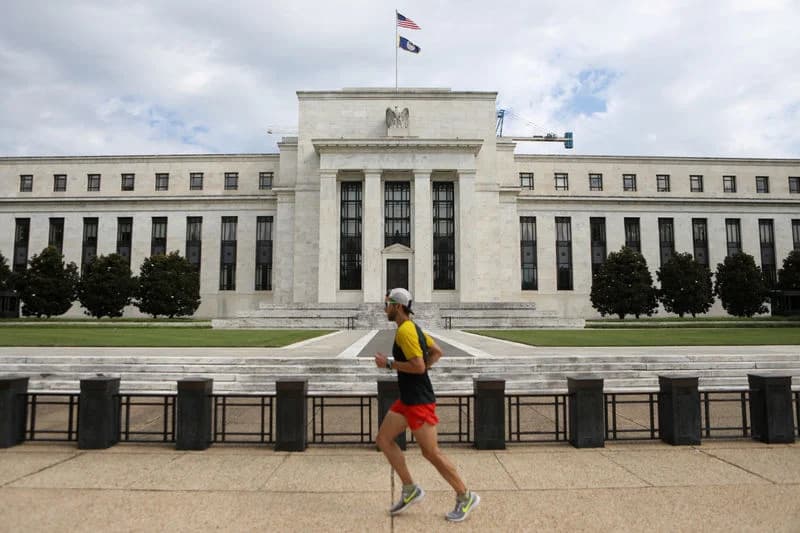
The Fed left its benchmark interest rate unchanged, as most market participants expected.
This week's selloff in U.S. Treasury bonds demonstrates that the Federal Reserve needs to bolster its credibility in the fight against inflation by raising interest rates, St. Louis Fed President Alberto Musalem told the Financial Times.
"At this juncture, earlier, gradual, and phased action on interest rates is preferable, less costly, and less disruptive than potentially later, larger, and more abrupt measures," Musalem said.
Musalem, who sits on the Federal Open Market Committee (FOMC) but has no vote on policy decisions this year, said he favored a quarter-percentage-point rate hike at this week's meeting.
The Fed left its benchmark interest rate unchanged, as most market participants expected, preferring to wait for incoming economic data and inflation indicators before taking its next step. This decision, coupled with comments by Fed Chairman Kevin Warsh, who suggested the possibility of revising certain elements of the Fed's inflation framework, triggered a sharp drop in Treasury bond prices.
The yield on 30-year US Treasury bonds rose above 5.2%, reaching a 19-year high. Bond yields are moving in the opposite direction to their prices.
Rising long-term yields could increase borrowing costs across the economy, affecting mortgage lending, corporate debt, and government financing. It could also put pressure on stock valuations, reducing the relative attractiveness of future corporate earnings.
Three of the 12 voting members of the FOMC voted against the decision and favored a 25 basis point rate hike.
On Friday, dissenting officials stated that failure to immediately raise short-term borrowing rates could result in inflation remaining above the Fed's 2% target. Inflation has remained above this level for more than five years.
Traders estimate a 67% chance of the Fed raising rates by 25 basis points in September, according to CME Group's FedWatch tool.
Musalem's comments suggest that support for tighter policy extends beyond the three official dissenters, heightening uncertainty about the timing and pace of future rate hikes.
Higher rates generally support bank lending margins but can put pressure on rate-sensitive technology, construction, and consumer stocks.