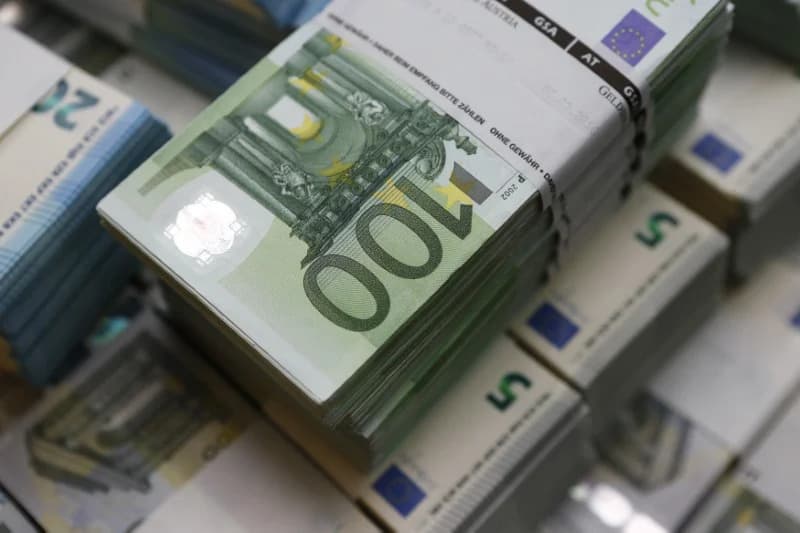
The US failed to notify the European Central Bank of the sale of euros as part of a joint currency intervention with Japan and only announced the deal after it had been carried out.
According to the publication, the ECB learned of the sale of euros and the purchase of yen after the operation was carried out on Friday, July 31. ECB President Christine Lagarde and US Treasury Secretary Scott Bessent discussed the intervention the following day. The transaction was carried out by the Federal Reserve Bank of New York on behalf of the US Treasury.
An Unprecedented Move
This was the first joint US-Japanese operation in nearly 30 years aimed specifically at strengthening the yen, the publication recalls. Typically, in such a situation, the market would have expected Washington to sell dollars for the intervention.
Some senior ECB officials viewed the use of euros without prior consultation as an unprecedented violation of long-established rules of cooperation between Western financial authorities. Since World War II, Western central banks and finance ministries have adhered to principles of mutual trust and coordination, with currency interventions typically conducted after consultation.
Washington's sale of the euro was "highly unusual" and "unfortunate," a source familiar with European policymakers' deliberations told the FT.
"This has never happened before," he said. According to the source, decades of close cooperation between Western central banks, which has contributed to financial stability and economic growth, could be at risk.
A US Treasury Department spokesperson told the FT that the department does not coordinate with foreign authorities decisions on the allocation of the Exchange Market Stabilization Fund, the funds from which were used for intervention. The ECB and the Federal Reserve Bank of New York declined to comment.
Why the US sold the euro
The US authorities decided to sell the euro because the market could perceive the sale of dollars as an attempt to weaken the US currency and a retreat from the strong dollar policy proclaimed by Bessent, the FT reports. Economists also speculated that Washington joined the intervention to avoid Japan having to sell US Treasury bonds at a time when long-term US borrowing costs were approaching a 19-year high.
The FT did not disclose the volume of euros sold by the US. According to preliminary data from the Bank of Japan, Tokyo may have spent approximately 13.8 trillion yen, or $87 billion, to support the national currency over two days. This is more than during the previous record-breaking campaign in April and May, when the authorities spent 11.73 trillion yen on interventions, noted Mizuho analyst Masayuki Nakajima.
The US and Japanese interventions helped strengthen the yen from approximately 164 to 157 per dollar. Before the intervention, the Japanese currency was at its lowest level since 1986. It subsequently weakened again to approximately 158 yen per dollar. Why the Yen is Weakening
One of the main reasons for the yen's weakening is the Bank of Japan's low interest rate of 1% and the wide gap between Japanese and US interest rates. Investors are borrowing cheap yen, exchanging them for dollars, and investing in higher-yielding US assets. These transactions, known as the carry trade, increase the supply of yen on the market and put downward pressure on the yen's exchange rate.
To stem the currency's decline, Japan is selling foreign reserve assets and buying yen. However, Washington is interested in preventing Tokyo from financing interventions through a massive sale of US Treasuries. Japan remains the largest foreign holder of US government debt, holding approximately $1.1 trillion in Treasuries.
Bessent also called on the Federal Reserve to increase the amount of dollars Japan can borrow against US government bonds through the repurchase agreement (REPO) facility. The current limit is $60 billion per day. This would allow Tokyo to obtain funds for interventions without selling Treasuries. However, interventions themselves can only support the yen temporarily: for the currency to strengthen sustainably, the gap between US and Japanese interest rates needs to be narrowed, while a rate hike by the Bank of Japan will increase the country's costs of servicing its enormous public debt.