Previous article
Why AI is unlikely to become a labor market apocalypse
Economy
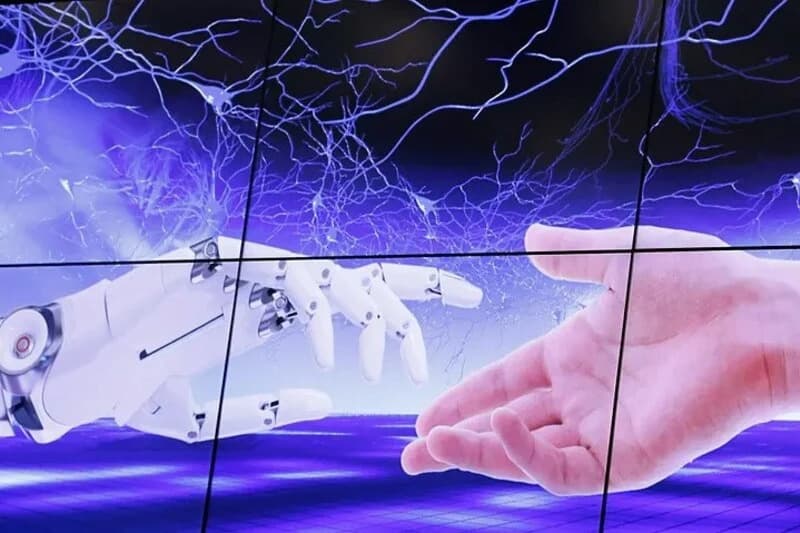
Artificial intelligence is more likely to replace individual tasks than entire professions, limiting the risk of large-scale job destruction.
This is the conclusion reached by analysts at BofA Global Research in a report covering employment in 206 industries across the US economy.
In industries most affected by AI, employment has remained largely unchanged since the launch of ChatGPT in late 2022. In the least affected industries, employment grew by approximately 2% over the same period.
However, the analysts found virtually no correlation between the degree of AI impact on an industry and its employment dynamics. This suggests that factors such as active hiring in the years since 2019 may explain some of the weakness in sectors with high exposure to the technology.
The total number of hours worked is also virtually unrelated to the level of AI impact, suggesting the absence of widespread employee reductions in work hours in response to the technology's adoption. Similar results were obtained for labor demand, measured by employment and job openings. AI adoption was not clearly associated with changes in demand from January to June 2026.
Possible exceptions were the information technology, finance, and insurance sectors. Both reported relatively high levels of AI adoption and a simultaneous decline in labor demand, which may indicate the use of AI to contain labor costs.
Youth employment presents a less optimistic picture. Unemployment among workers and recent college graduates aged 22 to 27 has risen from its 2023 lows and remains above the 2019 average.
BofA noted that AI may be contributing to the worsening employment situation for young workers, although trade policy uncertainty also played a role.
At the same time, investments in AI infrastructure are creating jobs in other sectors. By 2026, 95,000 jobs were created in nonresidential construction, and another 32,000 in AI-related manufacturing industries.
Collectively, these two sectors accounted for about a quarter of all new private-sector jobs during this period. BofA expects this growth, along with the emergence of new tasks and positions, to partially offset the initial displacement of workers due to AI adoption.