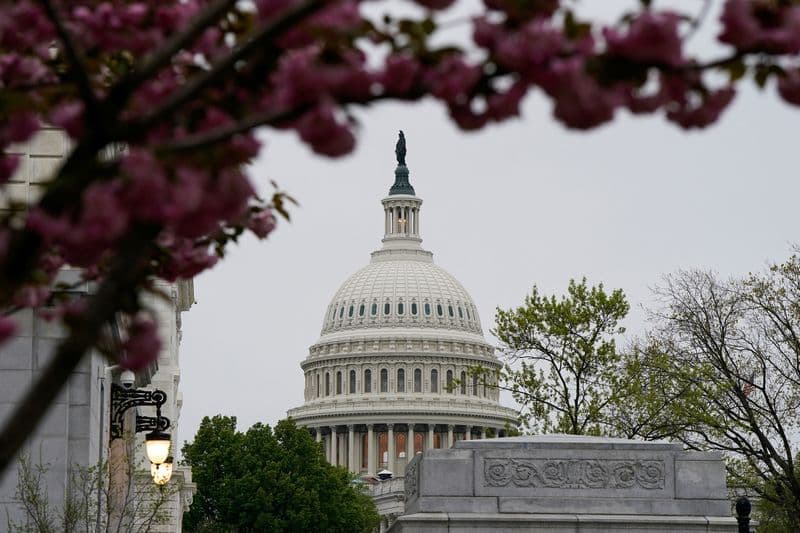
Ahead of the upcoming U.S. midterm congressional elections, analysts at UBS have estimated a 50% probability of a "Democratic sweep,"
a 40% chance of a divided Congress, and only a 10% likelihood that Republicans will retain control of both chambers. According to the bank, this outlook is driven by President Trump’s negative approval rating, which creates a challenging environment for Republican candidates.
UBS notes that Trump’s net approval rating of -21% is partly attributable to high gasoline prices, a sharp rise in mortgage rates, an unpopular conflict with Iran, and general public concern regarding the affordability of goods and services. Consequently, the midterm elections—which traditionally serve as a referendum on the incumbent president—are highly likely to shift the federal government from unified to divided control.
"While Republicans are likely to retain a significant number of seats in the House of Representatives in districts with strong party support, polls indicate that enough seats are shifting toward the Democrats to make a change in control increasingly probable," states a UBS report analyzing potential scenarios leading up to the November 3 elections.
Currently, the Democrats need to gain just three additional seats in the 435-member House of Representatives to secure a majority. UBS considers this goal achievable, despite the "aggressive mid-decade redistricting" efforts pursued by both parties. At the same time, the bank’s analysts emphasize that the exact margin of a potential Democratic majority—as well as the balance between moderate and progressive members within the party—remains uncertain. In the Senate, Democrats need a net gain of four seats to secure a 51-vote majority; in the event of a 50-50 split, the tie-breaking vote would fall to Vice President J.D. Vance.
"We expect Democrats to retain all the seats they currently hold, including the two highly contested ones in Michigan and New Hampshire," UBS notes, adding that North Carolina could potentially flip from Republican to Democratic control. Beyond that, the party would need to win three of the seats currently held by Republicans in Alaska, Ohio, Maine, Iowa, Texas, or Kansas.
While UBS sees a narrow but viable path for Democrats to regain control of the Senate, tight races in individual states—combined with Alaska’s ranked-choice voting system—could mean the final outcome remains uncertain for weeks after Election Day.
UBS also anticipates that even in the event of a "clean sweep" for the Democrats, their majority in both chambers would be slim, limiting the party’s ability to pass legislation without Republican support or to override a presidential veto.
Under any scenario, the bank believes the administration will likely make extensive use of executive authority regarding trade, immigration, and foreign policy.
A divided government would increase the risk of federal government shutdowns and tensions surrounding the national debt ceiling, even if lawmakers manage to reach bipartisan agreements on defense spending, social programs, and housing. At the same time, should the Republicans win, their majority would also be narrow; consequently, the 60-vote threshold required for Senate action would limit the scope for implementing major new initiatives.