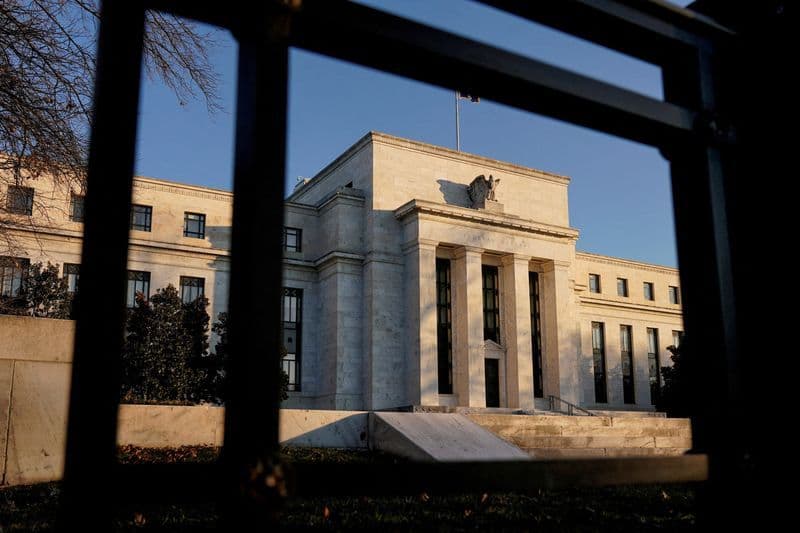
Get ready for a busy week. A number of central bank announcements, U.S. economic indicators, and reports from major tech companies are expected in the coming days.
1. The Fed’s Decision
One of the primary factors shaping market sentiment this week will likely be the Federal Reserve’s latest interest rate decision on Wednesday.
It is widely expected that the central bank will hold off on another rate hike, following a September vote by policymakers to increase borrowing costs—the first such move since 2023.
While officials have emphasized the need to bring inflation down to their 2% target, some have downplayed the urgency of an immediate hike. Consequently, much of the focus will be on the press conference held by the Fed Chair, analysts at Deutsche Bank noted.
"Our economists expect the statement itself to contain only limited changes, though there could be some dissent regarding the decision to keep rates steady. The broader message is likely to remain 'hawkish': our economists believe that recent inflation data supports the need for further tightening over time, even if the Fed chooses to pause this week," the analysts wrote.
According to the CME’s FedWatch tool, there is an approximately 73% probability that the Federal Open Market Committee (FOMC)—the body that sets interest rates—will implement another hike at its final meeting of the year in December.
Beyond the Fed, the European Central Bank and the Bank of Japan are also expected to keep interest rates unchanged during their respective meetings this week. 2. A Wave of U.S. Data
Furthermore, a series of economic data releases from the U.S. could influence how the market perceives the Federal Reserve’s interest rate trajectory.
On Tuesday, investors will get a look at September’s durable goods orders—figures that analysts at Deutsche Bank expect to remain resilient, bolstered by capital expenditures on AI and large aircraft orders. The Conference Board’s consumer confidence survey is also set to be released.
The main event, however, arrives on Thursday, when a fresh batch of U.S. data will provide insight into personal income and spending for September—including the Fed’s preferred inflation gauge—along with an initial estimate of economic growth for the third quarter.
Finally, the third-quarter Employment Cost Index could offer key information regarding labor costs, according to Deutsche Bank analysts.
"A strong positive surprise would make it difficult to maintain the view that the labor market is not contributing to inflationary pressure," they wrote.
3. A Flood of Earnings Reports
This week also brings a wave of U.S. corporate earnings reports, with roughly one-third of S&P 500 companies scheduled to release their results.
So far, only about a quarter of the S&P’s constituents have reported quarterly figures; analysts at Vital Knowledge suggest these results have been "healthy," driven by resilient demand, cost controls, and price increases.
However, this resilience may face a significant test in the coming days as major tech giants—Microsoft, Alphabet, and Amazon—unveil their earnings. Each of these companies has outlined plans to invest massive sums into artificial intelligence infrastructure, such as data centers and chips, fueling a race across Silicon Valley to develop and harness AI. Heavy spending has come under increased scrutiny in recent days as investors weigh the combined impact of rising debt burdens—incurred to fund AI development—and the higher cost of borrowing. Tech stocks took a significant hit last week.
"Most S&P 500 firms have so far managed to shrug off the recent slide in tech stocks, which has largely been driven by rising Treasury yields. However, we expect that tech stocks, non-tech stocks, and Treasury yields alike will fall sharply should concerns regarding AI intensify," James Reilly, a senior markets economist at Capital Economics, wrote in a note.
4. Israeli Elections in the Spotlight
Meanwhile, politics will add another layer of complexity to a week already packed with potential catalysts.
On Sunday, Luiz Inácio Lula da Silva won a fourth term as president of Brazil, narrowly defeating Senator Flávio Bolsonaro, despite having trailed him in the first round. A Tokyo-traded ETF tracking Brazilian stocks plummeted during Asian trading hours, as the outcome caught markets—which had anticipated a Bolsonaro victory—off guard.
Longtime Serbian leader Aleksandar Vučić also conceded defeat on Sunday following a loss in the general elections, which came after years of student-led protests. Israel, too, will hold parliamentary elections on Tuesday—the first since the October 7, 2023, attack by Hamas, the deadliest day in the country’s history. Much of the pre-election debate has centered on Prime Minister Benjamin Netanyahu’s leadership in the wake of that attack.
5. The Outlook for the War Involving Iran
According to the Associated Press, however, Netanyahu has enjoyed broad support regarding his two wars involving Iran—including one launched in coordination with the United States in late February.
Markets are closely monitoring the conflict involving Iran, which is now in its eighth month. The hostilities have driven a sharp rise in oil prices, fueling inflationary pressures and potentially prompting central banks to tighten monetary policy in response.
Uncertainty continues to surround the outlook for the war. On Monday, oil prices edged lower following reports that Qatari mediators had visited Tehran over the weekend in an effort to ease tensions with Washington.
Recent media reports suggest that U.S. President Donald Trump is considering launching attacks on Iran following the upcoming U.S. midterm elections in November. On Sunday, Trump told Fox News that "it’s time to make a decision" on whether to carry out new strikes against Iran or to reach a deal with Tehran. Last week, Trump hinted at the possibility of another military operation against Iran, prompting the Islamic Republic to threaten retaliatory measures.
Meanwhile, an exchange of fire between Iranian-backed Houthi militants in Yemen and Saudi Arabia has further fueled concerns regarding potential new disruptions to the recovery of oil supplies from the Middle East.