Previous article
Payment cards overtake cash for the first time in the Eurozone
Economy
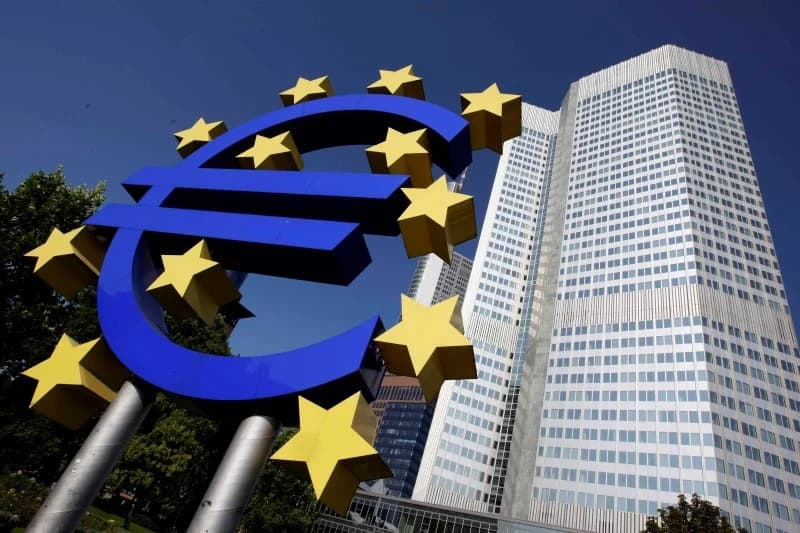
Payment cards have surpassed cash for the first time, becoming the most frequent method of payment in stores and other retail outlets across the Eurozone.
According to data from the European Central Bank (ECB), cards accounted for 45% of such transactions in 2026, while cash accounted for 44%.
The ECB has been tracking how Eurozone residents make payments since 2016. This latest study, known as SPACE, is the fourth of its kind. The regulator surveyed 43,937 individuals across 20 countries—including Bulgaria, which adopted the euro on January 1, 2026. The survey was conducted in two phases: in the autumn of 2025 and the spring of 2026. Participants kept a diary of all their payments over the course of a single day.
Cards gain ground even for small transactions
In 2019, cash was used for 68% of all everyday purchases and transactions, while cards accounted for 25%, according to the European regulator’s data. By 2026, the share of card payments had risen to 43%, while the share of cash had fallen to 35%. Over the last two years alone, card usage has grown by 4 percentage points, while cash usage has declined by 5 percentage points. According to the ECB survey, mobile payments are the fastest-growing category; 9% of retail purchases are now made using a smartphone, smartwatch, or smart ring—up from 6% in 2024 and 3% in 2022. Cards had already been the leading payment method in terms of total transaction value; they now account for 51% of the total funds spent at retail outlets.
Cards are increasingly being used for smaller purchases. Since 2019, the average value of a card transaction has decreased from 59 euros to 35 euros. Cash remains the leading payment method for purchases under 10 euros, though the share of card payments in this segment is growing. For purchases up to 5 euros, the share of card payments rose from 21% to 24% over the past two years, while for purchases between 5 and 10 euros, it increased from 32% to 39%. Over the last decade, the average number of cash payments per person per day has fallen from 1.28 to 0.77. Cash remains the primary payment method only in restaurants, bars, and cafés (48%) and for person-to-person transfers (44%).
The report notes that preferences change more slowly than habits. When shopping in stores, 54% of eurozone residents would choose a card or another cashless payment method, 22% would opt for cash, and 23% have no clear preference. These proportions have remained virtually unchanged since 2022. Cash is valued primarily for the anonymity it provides (39%) and because it makes tracking expenses easier (36%). Cards are valued because they eliminate the need to carry large amounts of cash (59%) and for their speed (40%). The option to pay with cash is important to 62% of respondents, while the option to pay via cashless methods is important to 82%.
The ECB study revealed a notable interest in cash among young Europeans: the ability to pay with cash is considered important by 59% of eurozone residents aged 18–24, compared to 64% of those aged 65 and older.
Access to cash remains satisfactory but is gradually deteriorating, the ECB notes. Currently, 85% of respondents find it easy to reach an ATM or bank branch, down from 87% in the previous period. For 44% of people, the process is "very easy"—a figure 6 percentage points lower than in 2022. Access is most difficult in Belgium and Malta, where 22% of residents describe it as challenging. Among those who attempted to withdraw cash from an ATM over the past year, 19% encountered difficulties. In the majority of cases (62%), the nearest ATM was either closed or temporarily out of service, while 34% reported that the machine had run out of cash. At bank branches, 17% of customers faced issues, primarily due to limited operating hours.
According to the European Central Bank (ECB), 55% of eurozone residents never pay a fee for ATM cash withdrawals (down from 57% in 2022). When an ATM does charge a fee, 37% of users pay it because they have no other way to access cash, while 21% consider the fee acceptable. Another 21% cancel the transaction, and 12% choose not to withdraw cash at all. In Spain, users are more likely to cancel a transaction than to pay the fee (30%). Consumers estimate that cash could be used for 93% of retail transactions, compared to 95% in 2022. Over the past month, 12% of respondents encountered a refusal to accept a card or mobile payment, while half as many (6%) faced a refusal to accept cash.
Finns pay by card but keep cash on hand
A survey by the European Central Bank (ECB) reveals that Finland has the lowest preference for cash. Only 10% of Finns prefer using cash for in-store purchases, compared to 39% in Austria—the country with the highest preference for cash. In Finland, 27% of retail transactions are made with cash; only the Netherlands has a lower figure (18%). Slovenia has the highest usage, with 58% of transactions made in cash. Across the 21 eurozone countries, cash remains the most frequent payment method in only 10. Finns also carry the least amount of cash: the median sum in a Finn’s wallet is 50 euros, compared to a eurozone average of 64 euros and 100 euros in Luxembourg.
At the same time, 44% of Finns keep a reserve of cash at home, according to ECB data—a figure higher than the eurozone average of 38%. Similar rates are seen among Finland’s Baltic neighbors: Estonia (46%), Latvia (43%), and Lithuania (41%). Slovakia leads the list at 58%, while France (28%) and Belgium (29%) have the lowest proportions. Across the eurozone as a whole, the share of people keeping cash in reserve has risen from 35% to 38% over the past two years. The ECB report does not specify the reasons for this trend.
Authorities in several European countries actually advise keeping cash at home in case of service disruptions. The Bank of Finland recommends maintaining a cash reserve sufficient to cover three days of expenses in the event that card payments become unavailable. Authorities in Austria, Finland, and the Netherlands advise keeping about 70–100 euros in cash at home for each family member—enough to get by for roughly 72 hours—according to an article titled "Keep calm and carry cash," published by the European Central Bank (ECB) in September 2025.
Over the past decade, Cyprus has seen the most significant shift away from cash. The ECB estimates that the share of cash payments at retail outlets in Cyprus has fallen from 88% in 2016 to 39%. Bulgaria, included in the study for the first time, remains one of the countries most reliant on cash: 51% of in-store purchases and 58% of person-to-person transfers there are made using cash.
One in twenty people lost money
For the first time, the ECB surveyed eurozone residents about fraud. The report states that 28% of respondents encountered attempted payment-related fraud over the past year, with 5% actually losing money. Among those targeted by fraudsters, nearly one in five (18%) fell victim. In the report’s foreword, ECB Executive Board member Piero Cipollone identified payment fraud as one of the emerging risks associated with the transition to digital payments. He noted that because the tactics used by fraudsters are constantly evolving, authorities and market participants must work together more closely.
The highest proportions of people who encountered attempted fraud were in Ireland (45%), Latvia (39%), and Lithuania (38%). The share of those who actually suffered a financial loss was highest in Lithuania (9%) and Ireland (8%), and lowest in Germany (3%). The ECB points out that these cross-country differences may partly stem from varying individual interpretations of what constitutes an attempted fraud. Some studies accounted only for direct attempts to establish contact, while others also included spam received via email, SMS, or messaging apps.
Victims were most frequently lured to fake websites (44%) or targeted via SMS or messaging app alerts (35%); they also received fraudulent emails (22%) or unsolicited phone calls (21%). According to the regulator, these methods often overlap, as users typically reach a fake website by clicking a link provided in an email or message. In such schemes, scammers manipulate individuals into taking a specific action themselves—for instance, transferring money. Among those who lost funds, 36% did so through money transfers, while 35% lost money during card-based payments. Another 13% lost funds via ATMs or cash withdrawals, and 5% through cryptocurrency transactions.
The crypto boom in Europe has run out of steam.
The European Central Bank (ECB) estimates that 10% of eurozone residents hold cryptocurrency, including stablecoins. Over the past two years, this share has grown by only 1 percentage point. In the preceding two-year period—from 2022 to 2024—the figure had more than doubled, rising from 4% to 9%, according to a previous SPACE study.
Slovenia has the highest proportion of cryptocurrency holders (17%, up from 15% in 2024), while Germany has the lowest (6%). In Greece, the share of holders fell from 14% to 10% over the same two-year period. Two-thirds of holders (66%) treat cryptocurrency solely as an investment, 15% use it for payments, and 18% use it for both purposes.
There are almost no places in the eurozone where one can make payments using cryptocurrency. Among companies that sell goods online, only 0.2% accept it, according to an ECB survey published in August 2026.