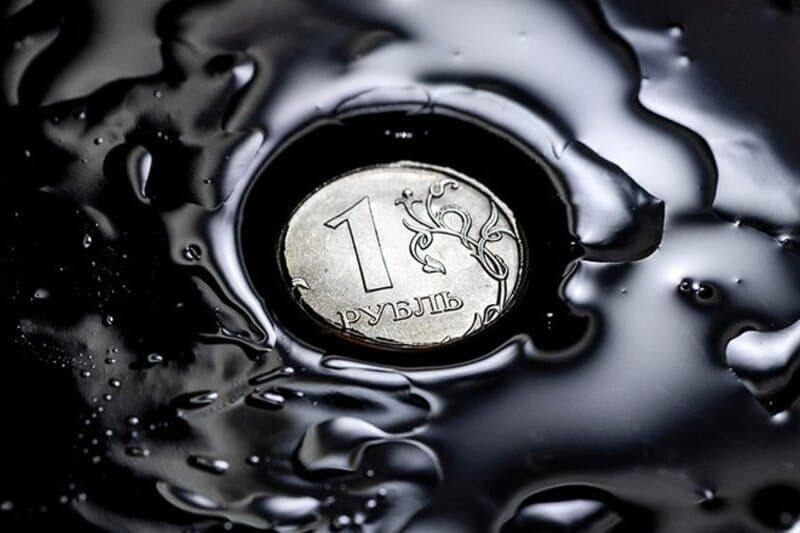
The Russian ruble could fall by almost a quarter this year after the government, faced with declining energy revenues, announced plans to increase yuan savings in the National Welfare Fund.
A weak ruble will help the budget cope with the growing deficit by increasing ruble revenue from oil sales and will also support exporters. A worsening financial situation could also accelerate peace talks with Ukraine, brokered by the United States.
Sberbank CEO Herman Gref stated that the ruble has no chance of remaining as strong as in 2025 (when it strengthened by 45%). He predicts the ruble will fall from the current 77 to 100 rubles per dollar by the end of the year, calling the current rate "counterproductive."
Finance Minister Anton Siluanov confirmed that the authorities will direct more funds to reserves to prevent their depletion. This means a reduction in the state's foreign exchange sales, which will weaken its support for the ruble.
Alfa-Bank analysts agree that reducing foreign exchange interventions will lead to a weakening of the ruble.
These statements were made after a budget meeting with Vladimir Putin. The Kremlin described the decline in oil and gas revenues (by 24% in 2025 and by half in February) as "operational difficulties" that can be addressed through macroeconomic stability.
Sberbank forecasts economic growth in 2026 at 1-1.5% (higher than the IMF forecast), but on the condition that the key rate is reduced from the current 15.5% to 12% and the ruble weakens. At the same time, the Central Bank warns that the weakening ruble creates risks of rising inflation.
The ruble is trading under moderate pressure on Friday, as the dollar continues to attempt to reclaim the 77 ruble mark. At the opening of trading, the USD/RUB pair briefly tested the 76 ruble level, but quickly rebounded and was up 0.3% at the time of publication.