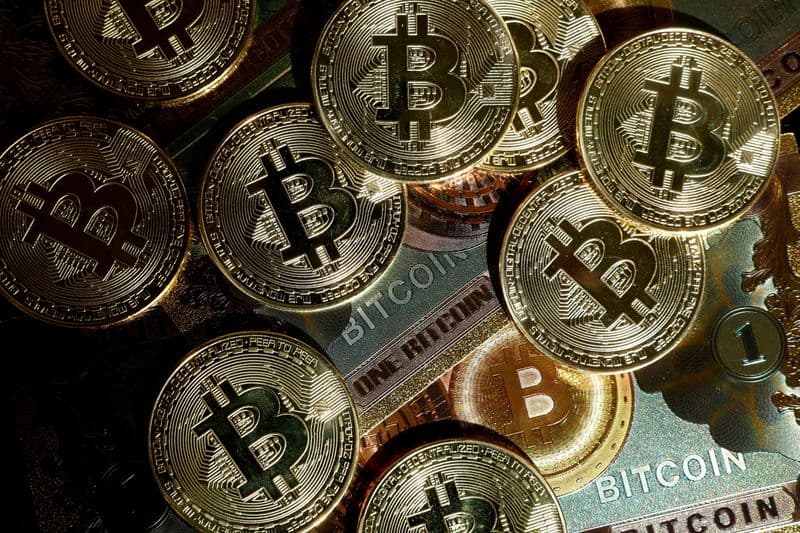
Bitcoin is recouping weekend losses, trading above $67,000, as investors react to a seismic shift in Middle Eastern geopolitics.
The recovery follows a period of extreme volatility triggered by the coordinated US-Israeli strikes on Iran, which President Donald Trump confirmed resulted in the death of Supreme Leader Ayatollah Ali Khamenei.
Tehran initially denied the reports, but Iranian state media later confirmed the leader's death, sending shockwaves through global markets.
As we noted in Saturday's review, Bitcoin has a well-documented habit of "flash crashes" on sudden geopolitical news before the market regains its footing. This cycle repeats itself almost perfectly. After falling to lows near $63,000 yesterday, the digital asset is seeing steady capital inflows as the initial panic subsides.
Regime Change Factor and Market Sentiment
Khamenei's assassination was a decisive move that few in the market expected. The subsequent return to Bitcoin suggests a growing narrative among traders that the "worst" of the military escalation may be over.
However, investor optimism is balanced by the massive power vacuum left in Tehran. Khamenei has been the supreme authority in Iran for decades, and his absence calls into question the country's next move and the stability of the region.
President Trump's recent calls for the Iranian people to "take back their country" suggest that Washington is considering fundamental regime change. For Bitcoin holders, the next few days are a "wait and see" period. If the Iranian government successfully fills the leadership vacuum without massive, multi-front military retaliation, Bitcoin's recovery could hold. But if the transition devolves into protracted civil or regional strife, this $67,000 support level could be tested again very quickly.
Risks of Retaliation and a Safe Haven Test
While Bitcoin is rising, the threat of a full-scale regional war has not disappeared. Iran's Islamic Revolutionary Guard Corps has already launched strikes on neighboring countries hosting American bases, and at least one death has been reported following a retaliatory strike on Israel. This tit-for-tat military environment is precisely what keeps institutional crypto investors on edge.
The real question now is whether Bitcoin can truly act as a "digital gold" hedge or whether it will continue to trade as a high-risk tech stock.