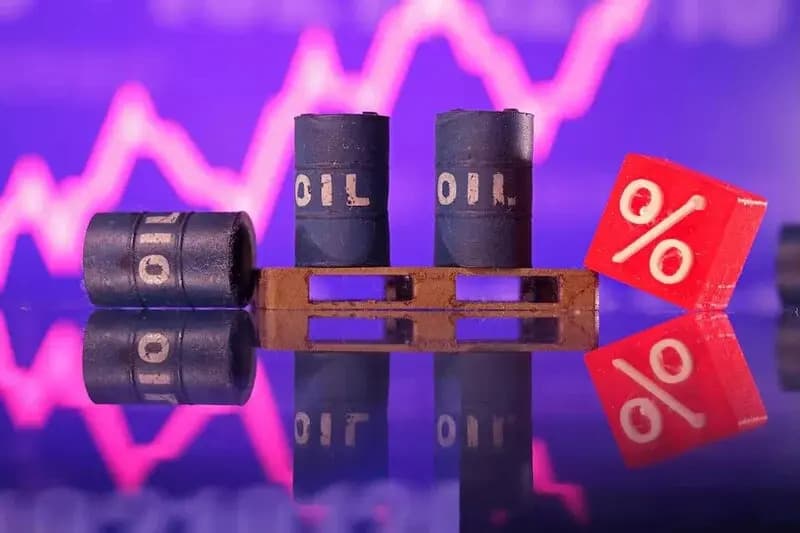
When the US and Israel launched their war on Iran in late February, analysts predicted that oil prices could rise to $150 or even $200 per barrel.
A fifth of the world's supplies passing through the vital Strait of Hormuz could suddenly be cut off from markets.
However, Brent futures peaked at only $126—well below the 2008 all-time high of $147—and averaged just $101 per barrel from the start of the conflict on February 28 until June 11, when Trump called off the strikes on Iran. In early July, the price briefly fell back to the pre-war $70.
Here are several reasons why oil prices haven't seen the expected surge. For now. 1. China Surprise
The biggest surprise was China, the world's largest oil importer, which cut crude purchases to a nearly decade-low by June. Fuel exports were curtailed, the population switched from private cars to electric taxis, and the petrochemical sector reduced production.
2. The US Pumps More
The US, the world's largest oil producer, increased production to a record 13.93 million barrels per day by April. The country also released oil from the Strategic Petroleum Reserve as part of a record 400 million barrel release coordinated by the IEA in March, helping to ease supply disruptions.
3. Trump Burns the Bulls
US President Donald Trump has repeatedly confused bullish sentiment with statements about peace agreements and the resumption of flows through the Strait of Hormuz. Liquidity in the oil market has declined, as many traders are hesitant to make large bullish bets due to the risk of sudden reversals.
"Everyone is bullish now, but no one is long," said Ilya Bushuev of the Oxford Institute for Energy Studies.
After reducing their Brent bullish position to its lowest since the beginning of the year in early July, funds then increased it by the most in six months in the week ending July 14, according to ICE data. However, at approximately $14.8 billion (at Monday's prices), this position is still more than 50% below its six-year peak in late March. The market is suffering from "headline fatigue," which reduces the impact of new news on prices, noted Ole Hansen, head of commodity strategy at Saxo Bank. 4. Restoring Flows through Hormuz
Saudi Arabia, the Persian Gulf's largest oil exporter, sharply increased shipments from its Red Sea port of Yanbu, helping offset the loss of barrels through the Strait of Hormuz. Shipments through Hormuz briefly resumed in June, easing concerns about oil availability, but fell again in July with the resumption of fighting.
5. Abundance of Physical Cargoes for Immediate Delivery
Traders say an abundance of physical oil is limiting price reaction to the latest escalation of the conflict. Crude oil differentials in Europe, such as the North Sea Forties, which contribute to the global benchmark Dated Brent, have fallen from a record premium in April to a discount.
"There's a lot of oil for immediate delivery around right now," said veteran trader Adi Imshirovich. "But this may not last long."