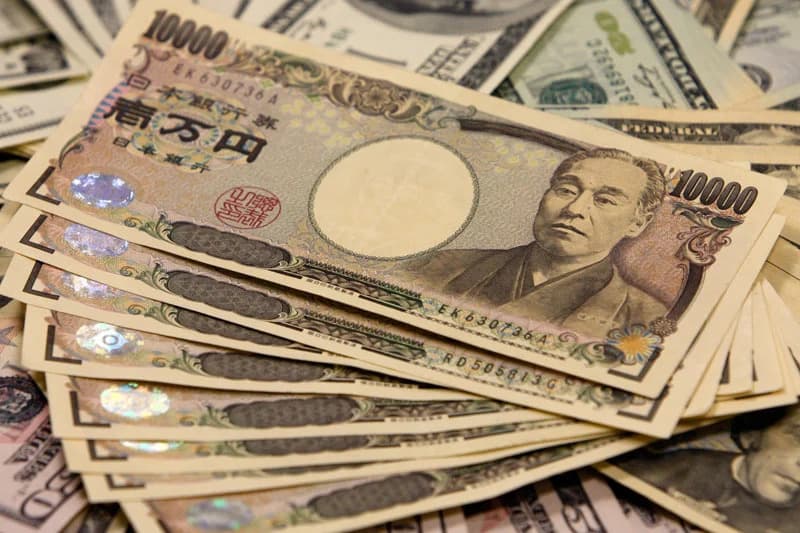
Coordinated foreign exchange intervention allows two or more governments to simultaneously purchase a currency under pressure, increasing market demand.
Japan and the United States conducted a coordinated yen-buying intervention on July 31, 2024. The immediate goal was to push the USD/JPY pair below 155, which, following previous Japanese interventions, was perceived by the market as a sustainable support level.
Japan typically finances yen purchases from its $1.3 trillion foreign exchange reserve portfolio. As of the end of June, this included $162 billion in deposits and $929 billion in securities, a significant portion of which is reportedly held in US Treasury bonds. An estimated $283 billion of these securities matures within one year. Taking into account interest income, Japanese reserves are capable of generating approximately $27 billion in monthly liquidity without asset sales.
However, recent interventions could have exceeded ¥10 trillion in three trading days. At this scale, the Ministry of Finance would likely need to either sell securities, raise funds against Treasury bonds through the Federal Reserve's FIMA repo facility, or a combination of both.
The FIMA facility allows foreign monetary authorities to temporarily exchange Treasury securities for dollars, reducing the need for direct bond sales. Japan currently has a counterparty limit of $60 billion, and the relatively high cost of using this instrument may limit its use.
The US Treasury Department can finance interventions through the Exchange Stabilization Fund, which holds dollars, special drawing rights, and foreign currencies. The Federal Reserve also has the right to participate in Treasury Department operations, although it is not obligated to do so.
During the July operations, Washington reportedly sold euros, not dollars, to buy yen. Further interventions may require direct sales of USD/JPY once available euro reserves are exhausted.
This coordination expands the perceived scope of available resources beyond Japanese reserves and signals possible additional measures, such as faster rate hikes by the Bank of Japan or fiscal adjustments. Following the intervention, analysts lowered their year-end USD/JPY forecast from 152 to 149.